
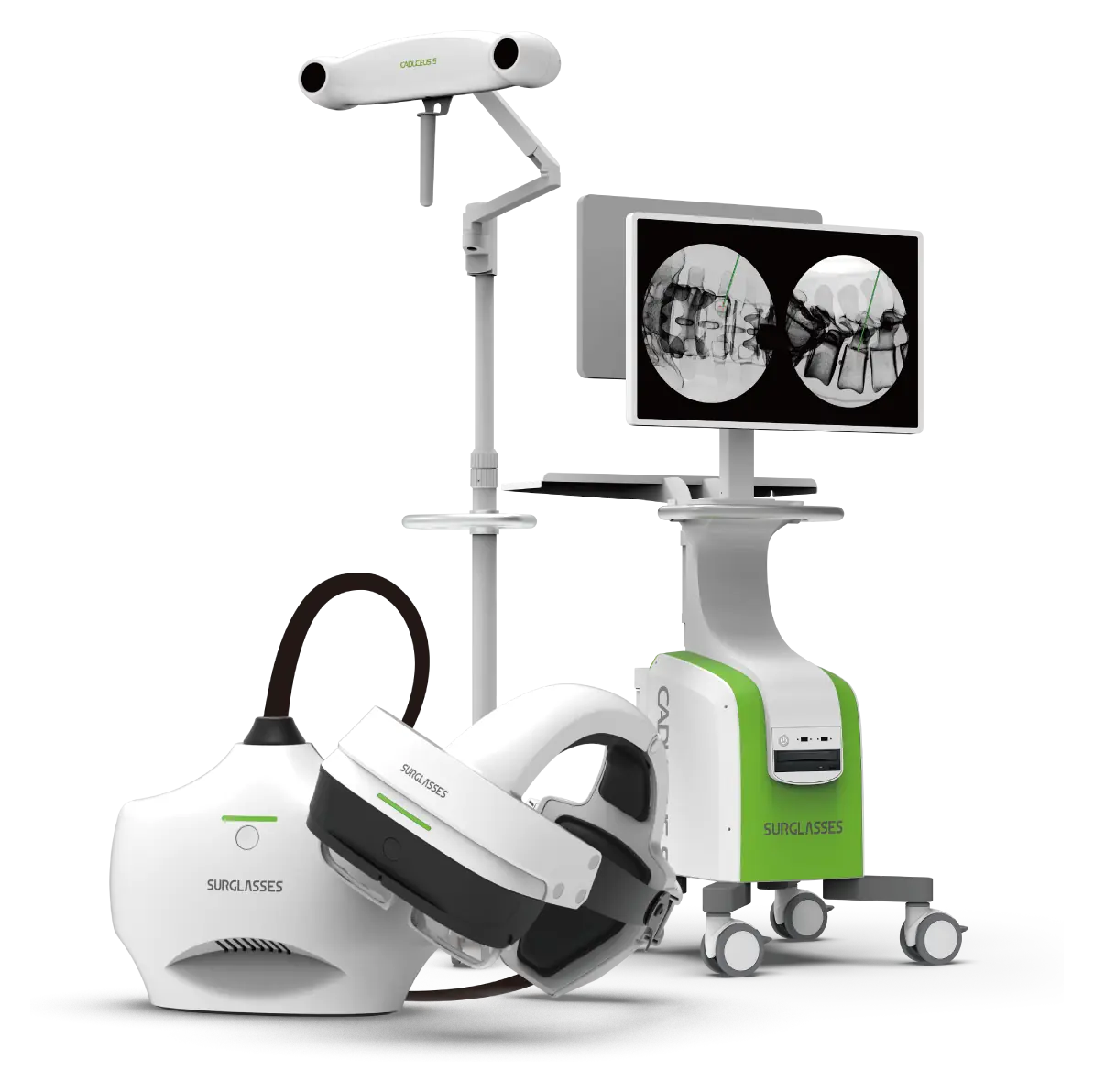
Caduceus S
Caduceus S, an AR Computer Surgical Navigation System
Caduceus S, an AR Computer Surgical Navigation System, is used in spinal surgery. Using augmented reality (AR), it projects the navigation image into the surgeon's own line of sight, so the image, the instrument and the anatomy stay in one view, without a monitor across the room.
FDA 510(k) cleared: K220554 (opens in a new tab), K242271 (opens in a new tab) · TFDA Class II license MOHW-MD-No. 008401
What it is
Augmented reality, brought into the surgical field
Caduceus S is an image-guided navigation system for percutaneous spine procedures. A transparent near-eye headset lets the surgeon look at the patient and at the navigation images at the same time.
What the system does
- Headset display — the headset displays 2D stereotaxic screens and a 3D anatomy model
- Instrument tracking — optical tracking shows the location of tracked surgical instruments relative to the patient's acquired scan
- Posterior pedicle screw placement — the navigation image is available throughout percutaneous spine procedures
- Planning — pedicle screw implant size planning and navigation on rigid bone structures
AR navigation in action
Why augmented reality for spinal surgery?
Augmented reality merges the imaging with the real surgical environment rather than putting it on a screen beside it. Six features of the system are described below.
A live case, seen the way the surgeon sees it
This footage shows a procedure in a real operating room.
Registration from the C-arm images
Registration is done from the C-arm images themselves.
Imaging in the field of view
The headset projects the navigation images into the surgeon's field of view.
Tracked instruments
Shows the location of tracked surgical instruments relative to the patient's acquired scan.
Headset display
2D stereotaxic screens and a 3D anatomy model.
CT, C-arm, 3D C-arm or intraoperative CBCT images
Navigation from images acquired preoperatively by CT or intraoperatively by C-arm, 3D C-arm or CBCT.
Features
In the operating room
The navigation image is displayed where the surgeon is looking.
Intuitive imaging, in the surgeon's own line of sight
The navigation image is displayed directly in the surgeon's field of view, so position can be checked without looking at an external monitor.
The headset and a tracked instrument
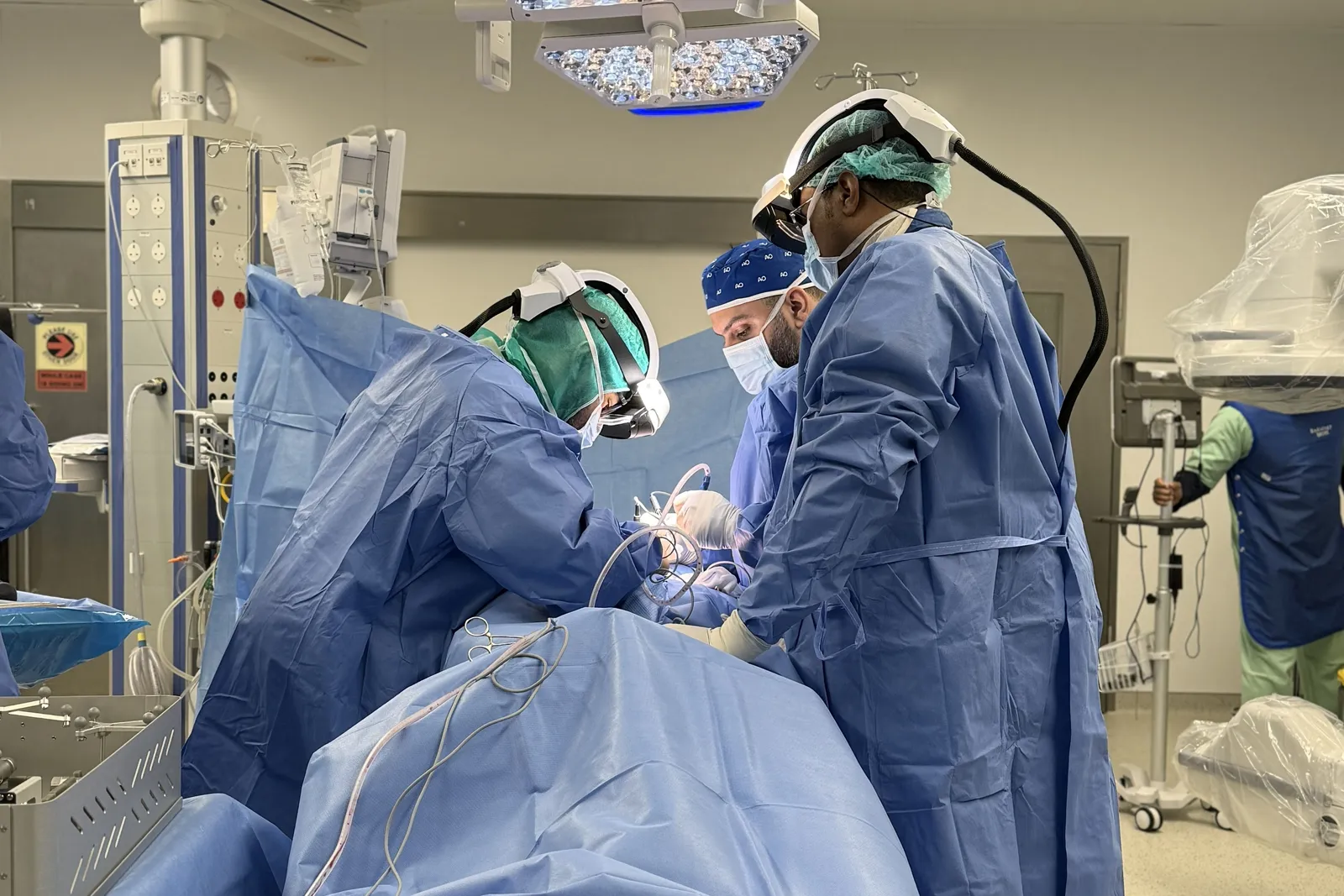
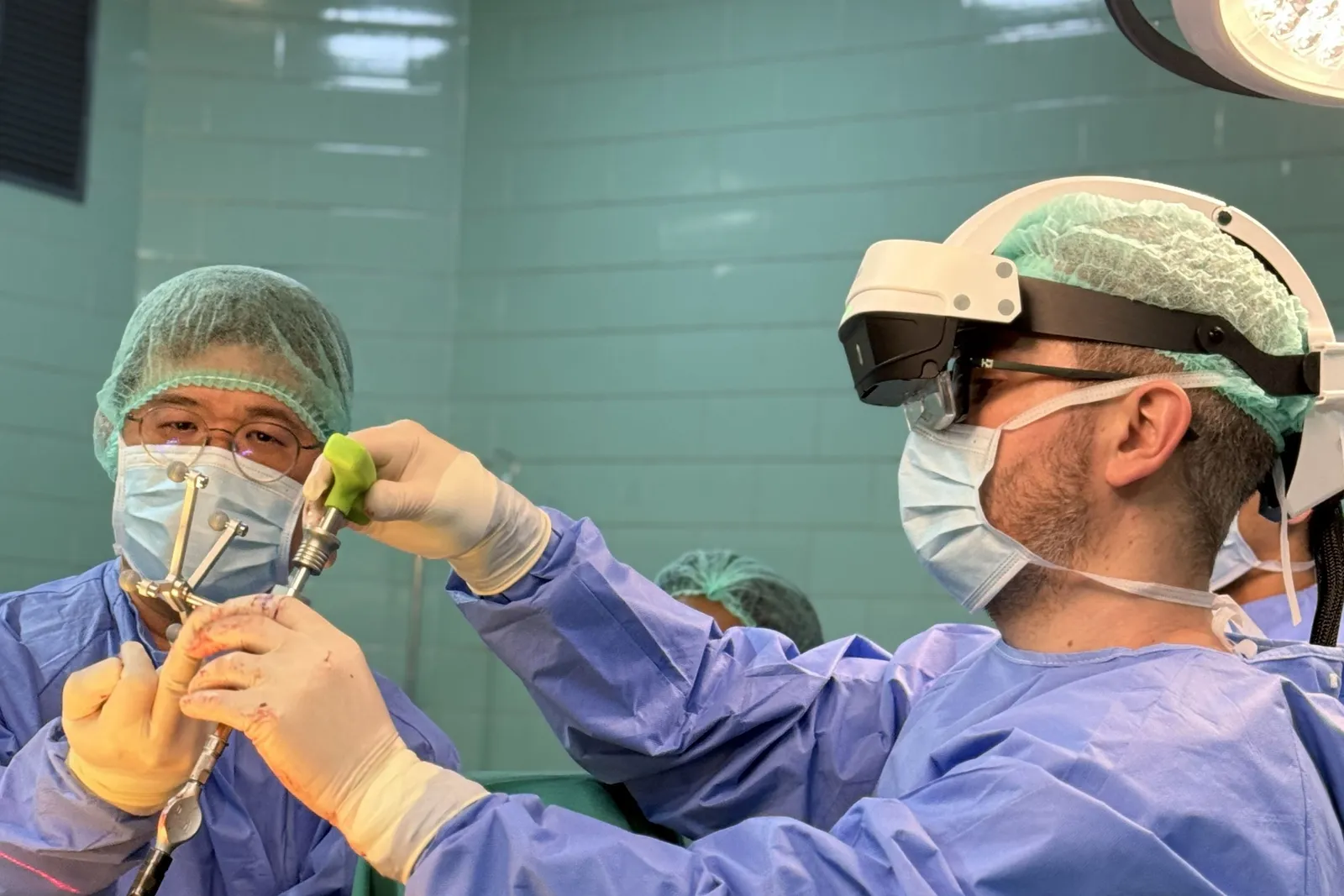
A surgeon and an assistant work with a tracked instrument, the headset in use.
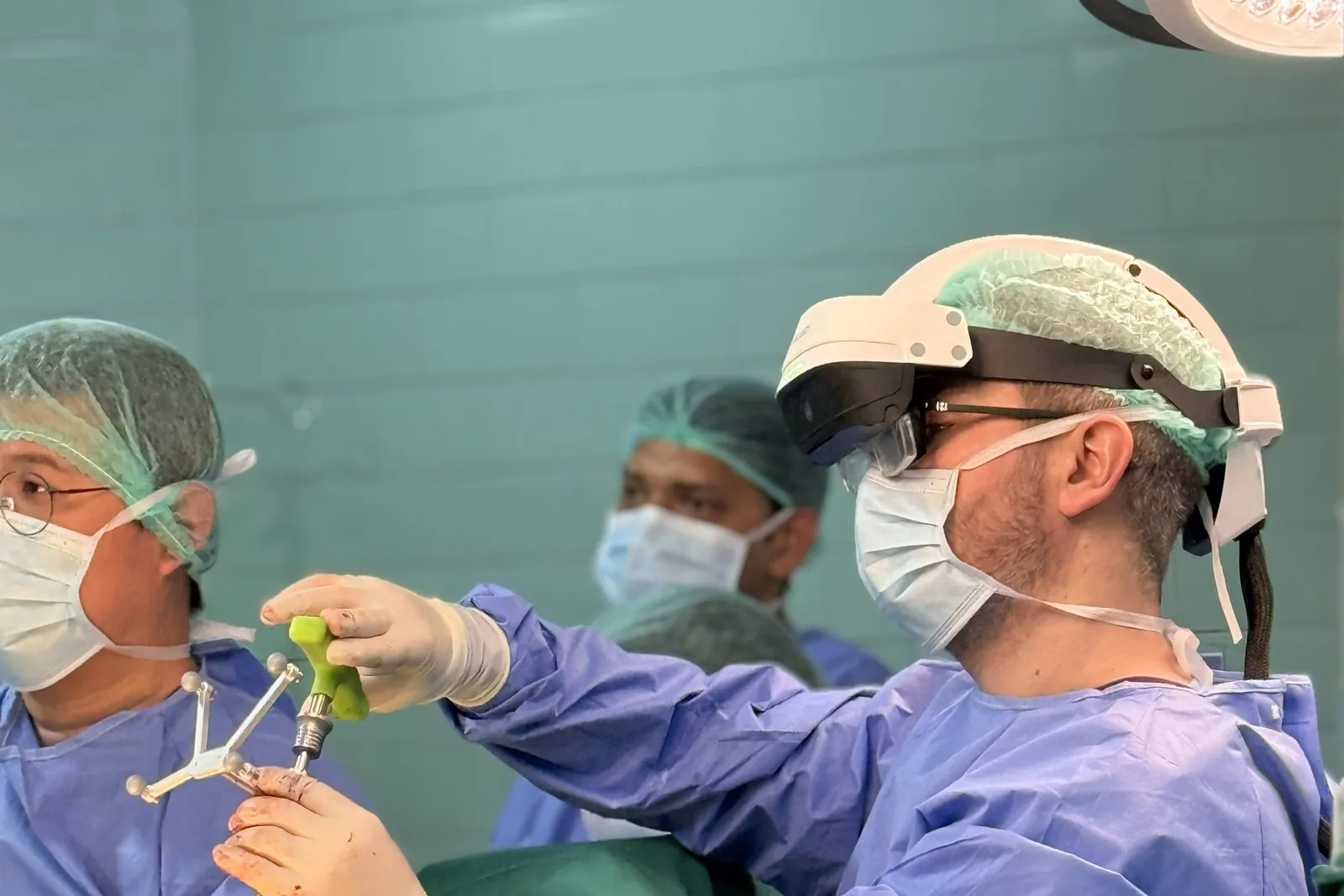
Colleagues looking on
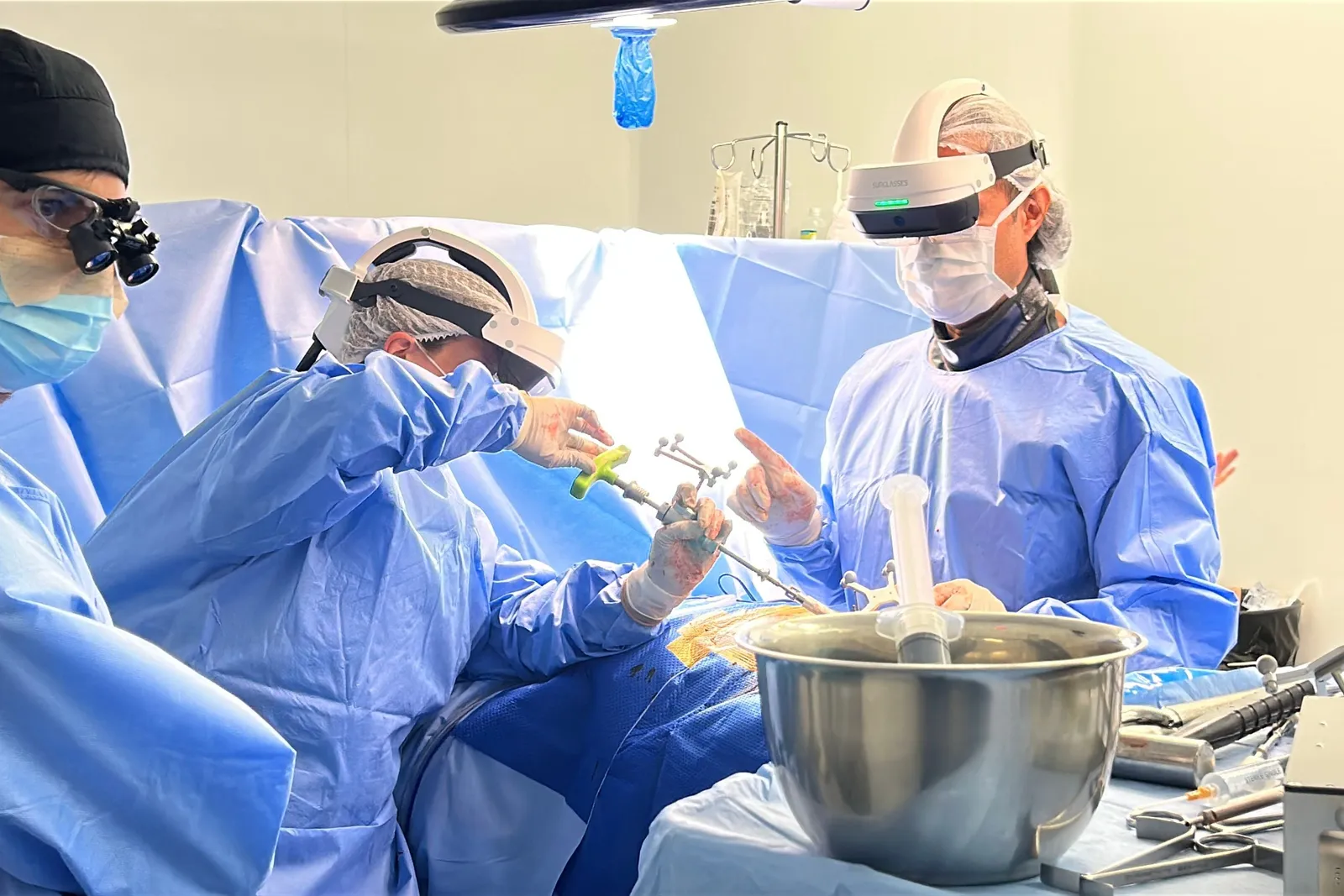
A surgeon wearing the headset holds a tracked instrument while colleagues look on.
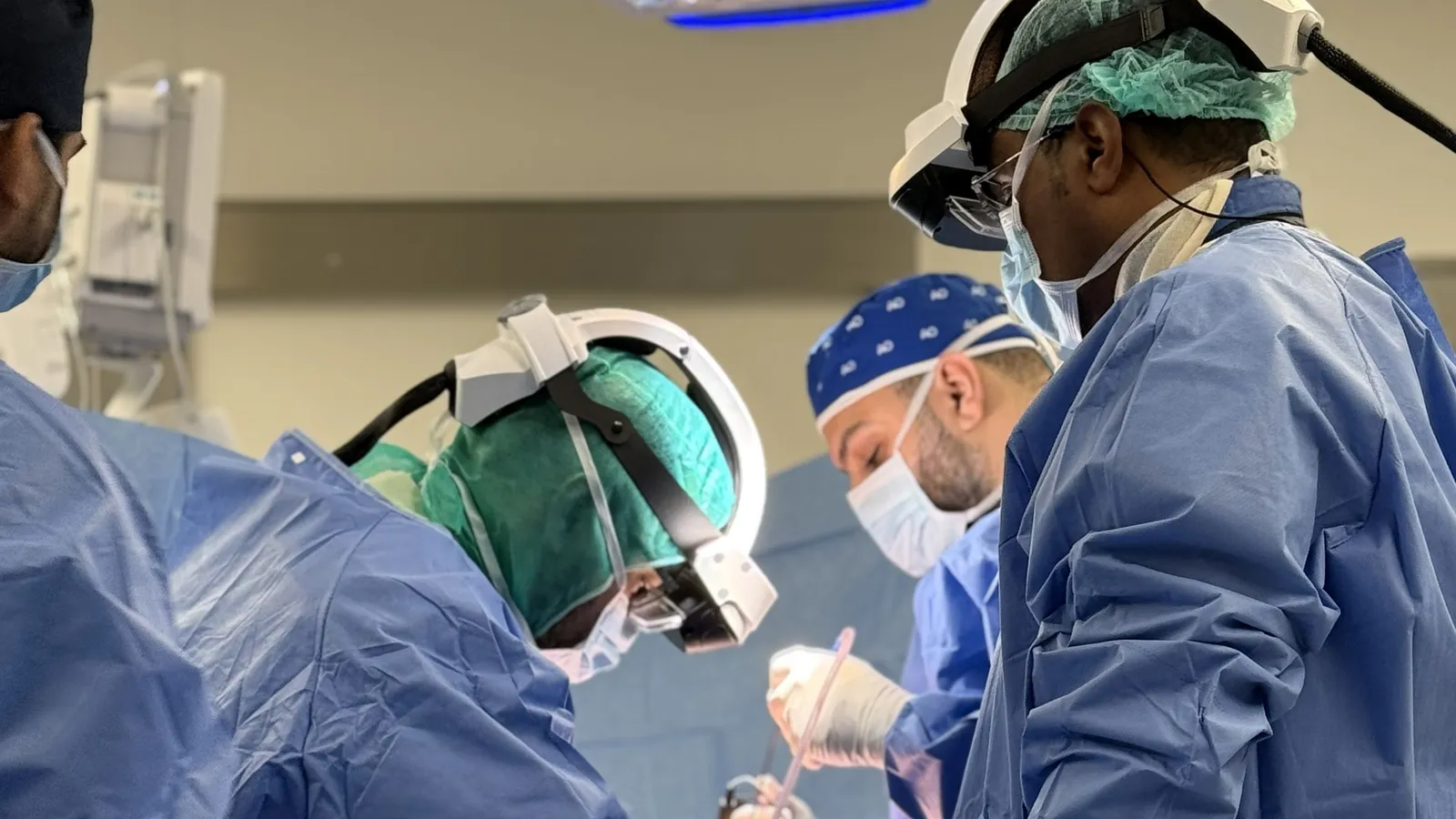
The team in the operating room
A surgical team works around a draped patient in an operating room, two members wearing Caduceus S headsets.
Caduceus S is cleared by the US FDA under 510(k) (K220554, K242271) and licensed as a Class II medical device by Taiwan's TFDA, and is manufactured under an ISO 13485:2016 quality management system. See every clearance and license in full
Percutaneous procedures
Navigation on CT or C-arm images
Caduceus S supports image-guided navigation of medical image data acquired preoperatively by CT or intraoperatively by C-arm, in percutaneous spine procedures.
Instrument tracking
The system shows the location of tracked surgical instruments relative to the patient's acquired scan.
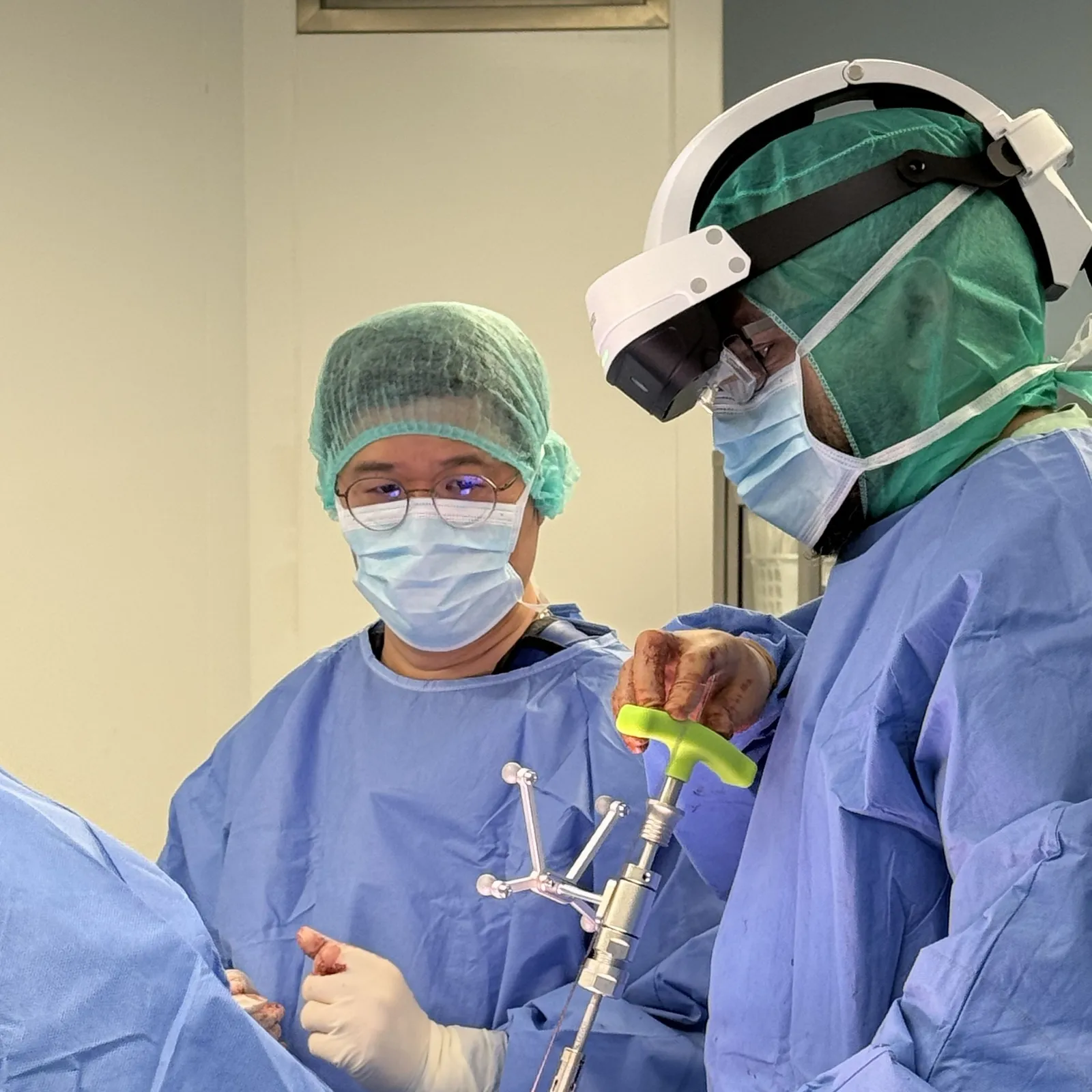
A team with a tracked instrument
Members of a surgical team work together with a tracked instrument in an operating room.
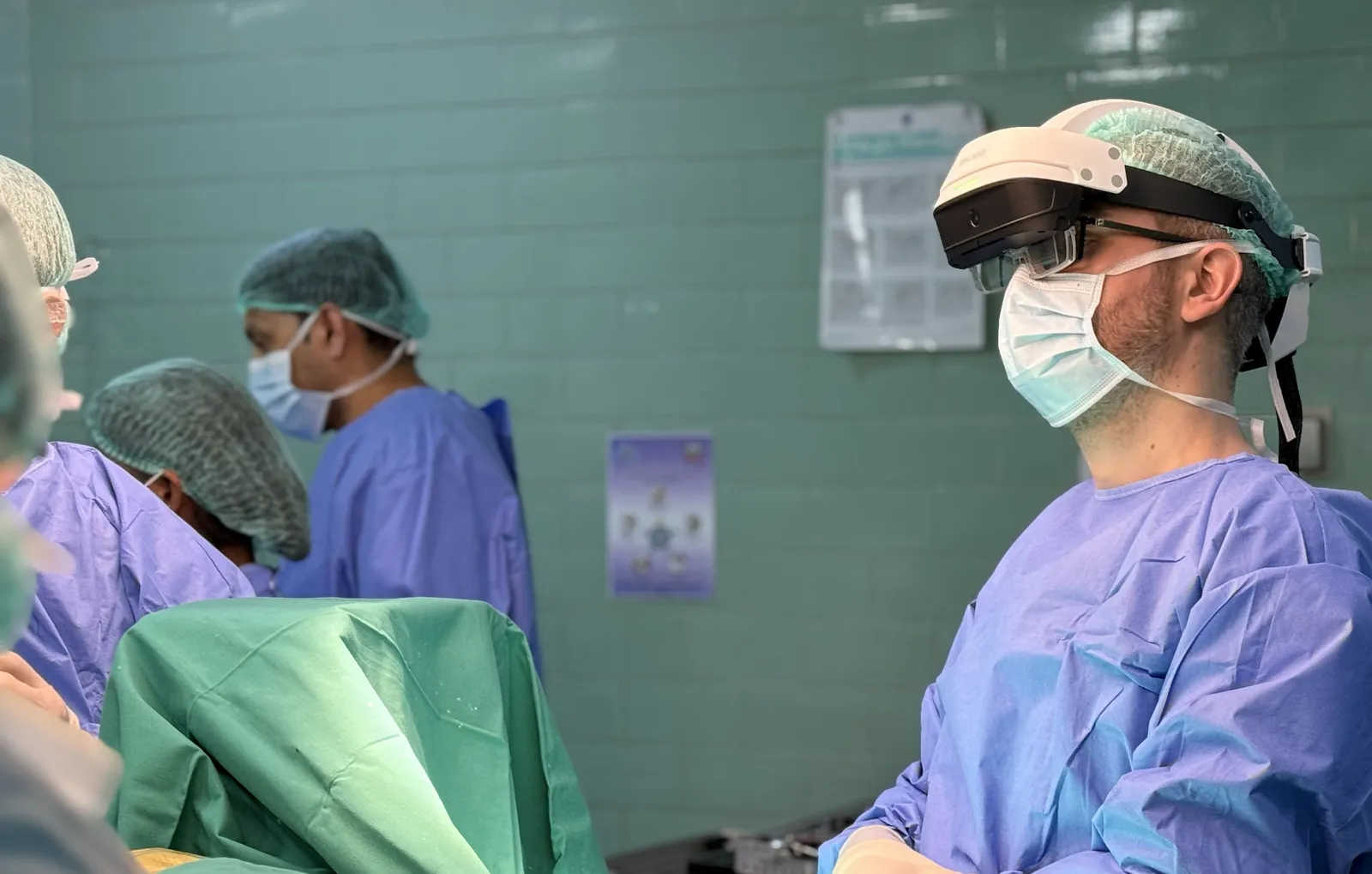
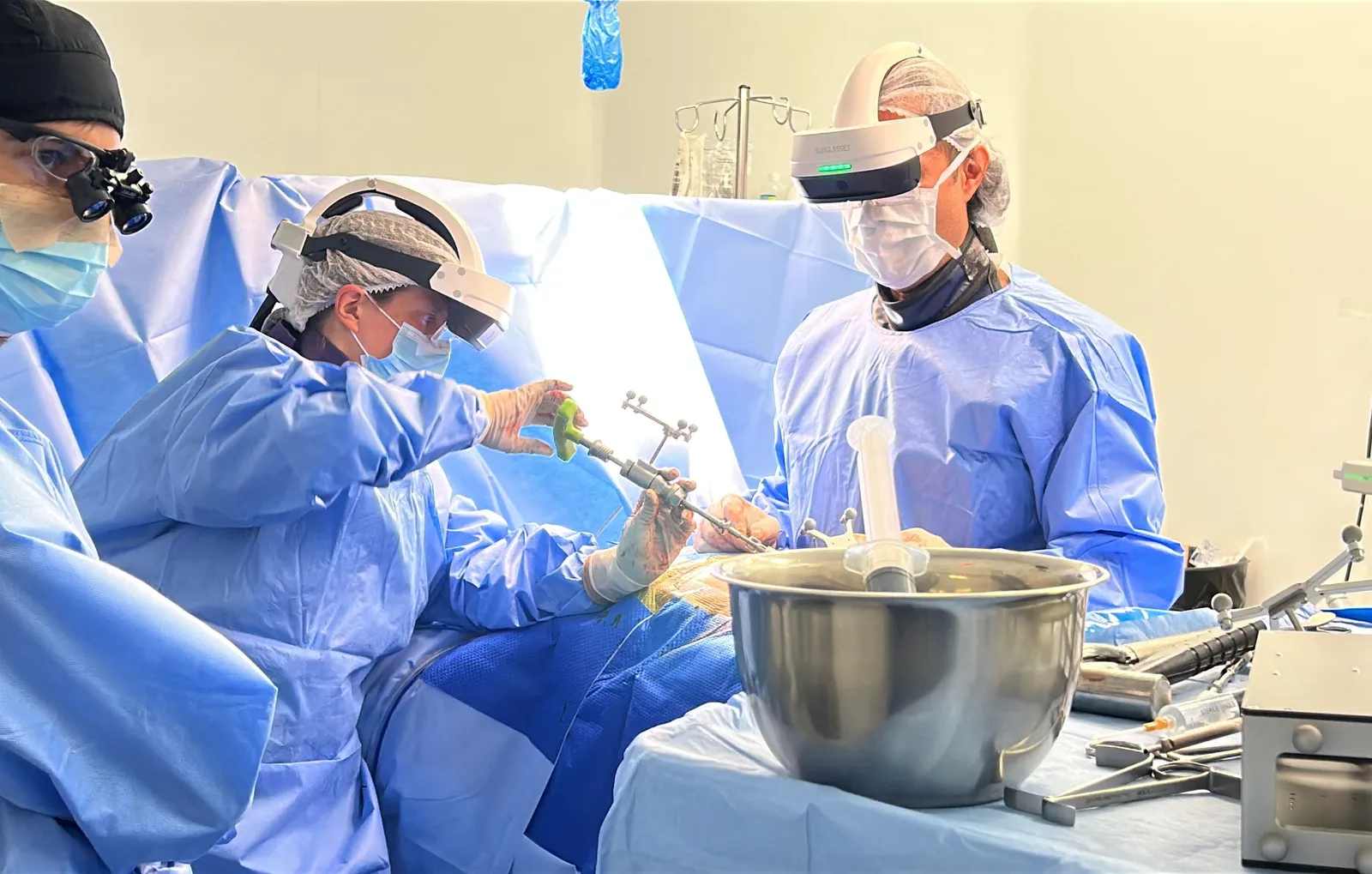
A surgeon wearing the headset
A surgeon in profile wearing the Caduceus S headset in an operating room.
Imaging modules
Navigation on the imaging in the room
Caduceus S supports image-guided navigation of medical image data acquired preoperatively by CT or intraoperatively by C-arm. Three modules match the imaging device in the room: a 2D C-arm, a 3D C-arm or an intraoperative CBCT.
| Aspect | 2D C-arm module | 3D C-arm module | Intraoperative CBCT module |
|---|---|---|---|
| Imaging source | A standard 2D C-arm | A 3D C-arm | An O-arm intraoperative CBCT |
| Operating room footprint | Small footprint | Small footprint | Small footprint |
| Imaging equipment needed | 2D C-arm | 3D C-arm | Intraoperative CBCT |
| Pre-registration time | Reduced pre-registration time | Reduced pre-registration time | Reduced pre-registration time |
All three columns are Caduceus S modules, not separate products. Which one is used depends on the imaging device in the operating room.
2D C-arm module
Registration is performed from the C-arm images themselves.
3D C-arm module
The reconstructed volume, the planned trajectory and the instrument position sit on one screen.
Registration
Various registration tools are supported, and DICOM images load straight into the navigation workstation.
Intraoperative CBCT module
The intraoperative CBCT module pairs Caduceus S with an O-arm. The scan is taken in theater, on the patient as they are positioned, and the navigation runs on that scan. X-ray images can be brought into the navigation alongside the CBCT scan.
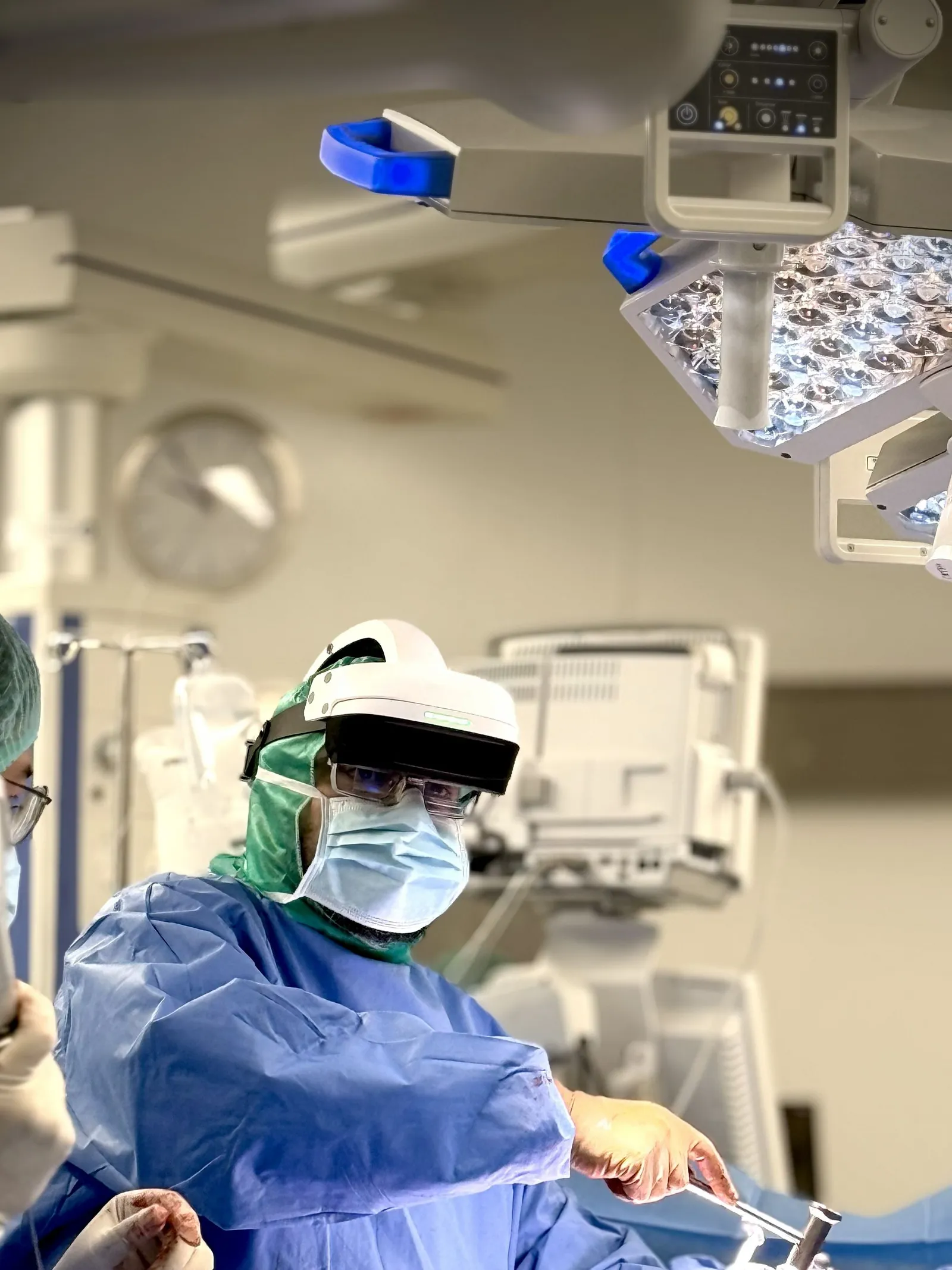
Deployment settings
Where Caduceus S is used
Hospitals
For hospitals the system adds a 3D C-arm module and an intraoperative CBCT module — O-arm or a hybrid OR.
The individual imaging modules — 2D C-arm, 3D C-arm and intraoperative CBCT — are described in the Imaging Modules section.
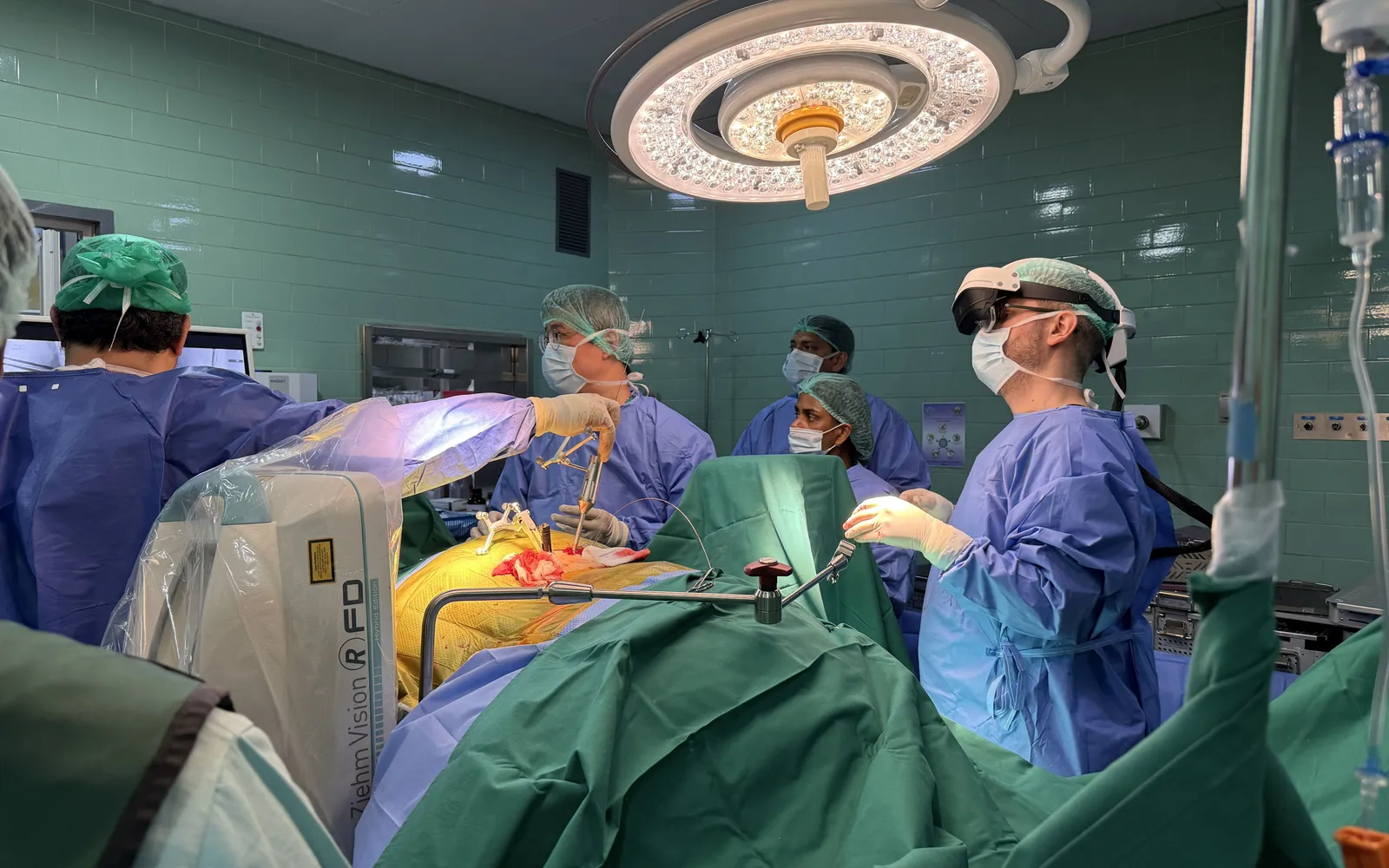
In either setting the clinical work is the same: the system is FDA 510(k) cleared for posterior pedicle screw placement.
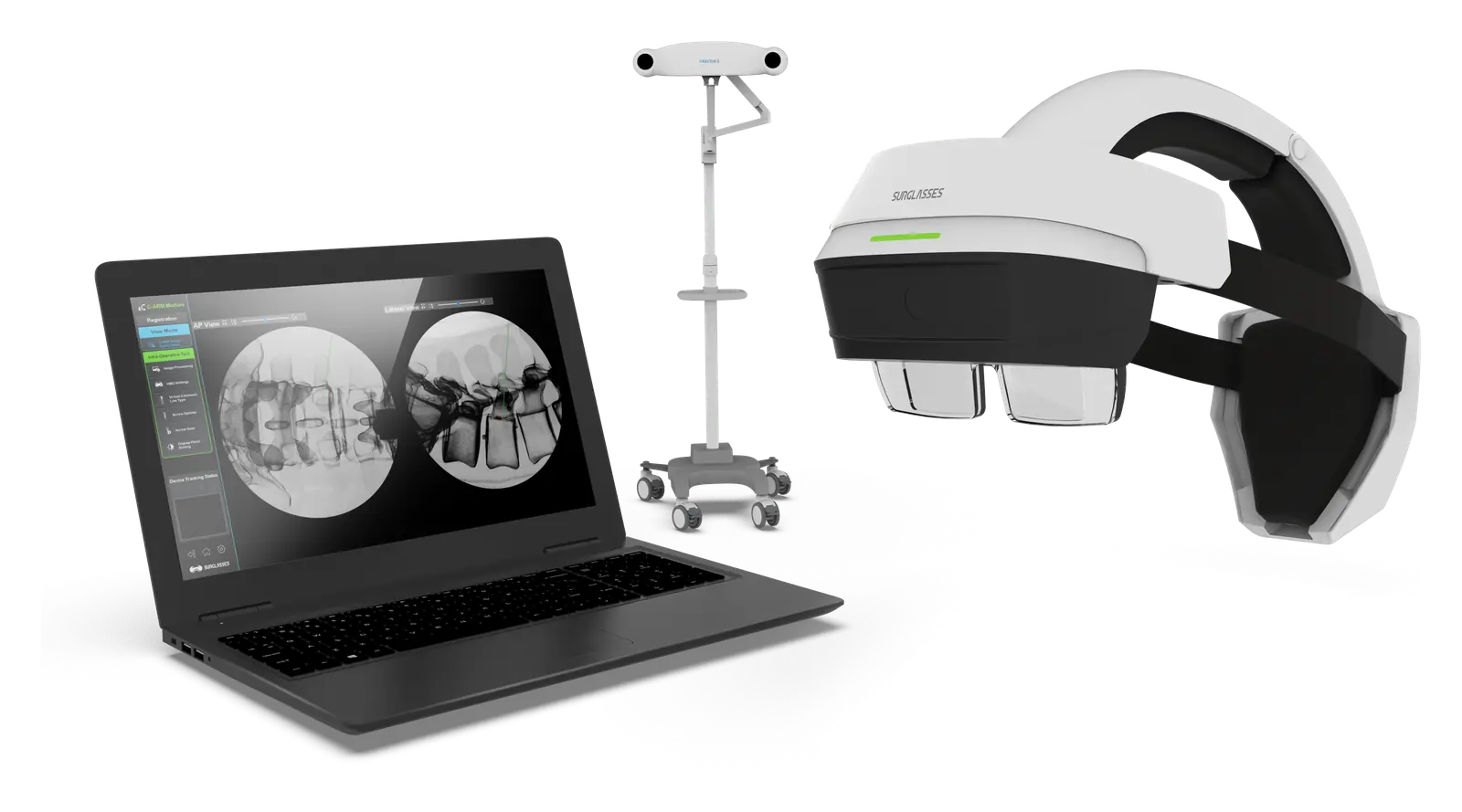
Caduceus S — laptop version
Portable AR navigation
The same navigation, running on a laptop. Deployable across operating rooms and portable between theaters.
One module, no cart
The laptop version supports one navigation module per software installation, chosen at purchase: the 2D C-arm module, the 3D C-arm module or the intraoperative CBCT module.
- Compact and mobile — no bulky equipment
- Takes little operating room space
Regulatory status
Clearances, licenses and availability
Caduceus S is FDA 510(k) cleared (K220554, K242271) and licensed as a Class II medical device by Taiwan's TFDA. Availability differs by country; please contact us about your country.
Clearances and licenses: Taiwan TFDA, US FDA, Thailand FDA, Malaysia FDA, Philippines FDA
Augmented reality navigation
See it in your own operating room
Tell us what imaging you already have — a 2D C-arm, a 3D C-arm, an intraoperative CBCT — and the procedures you run most often, and we will show you the configuration that fits. Online, or on site with the system in front of you. If you are near our US office in Naples, Florida, we can bring the demo to you.