
Medical Education
Say goodbye to cadaver shortages
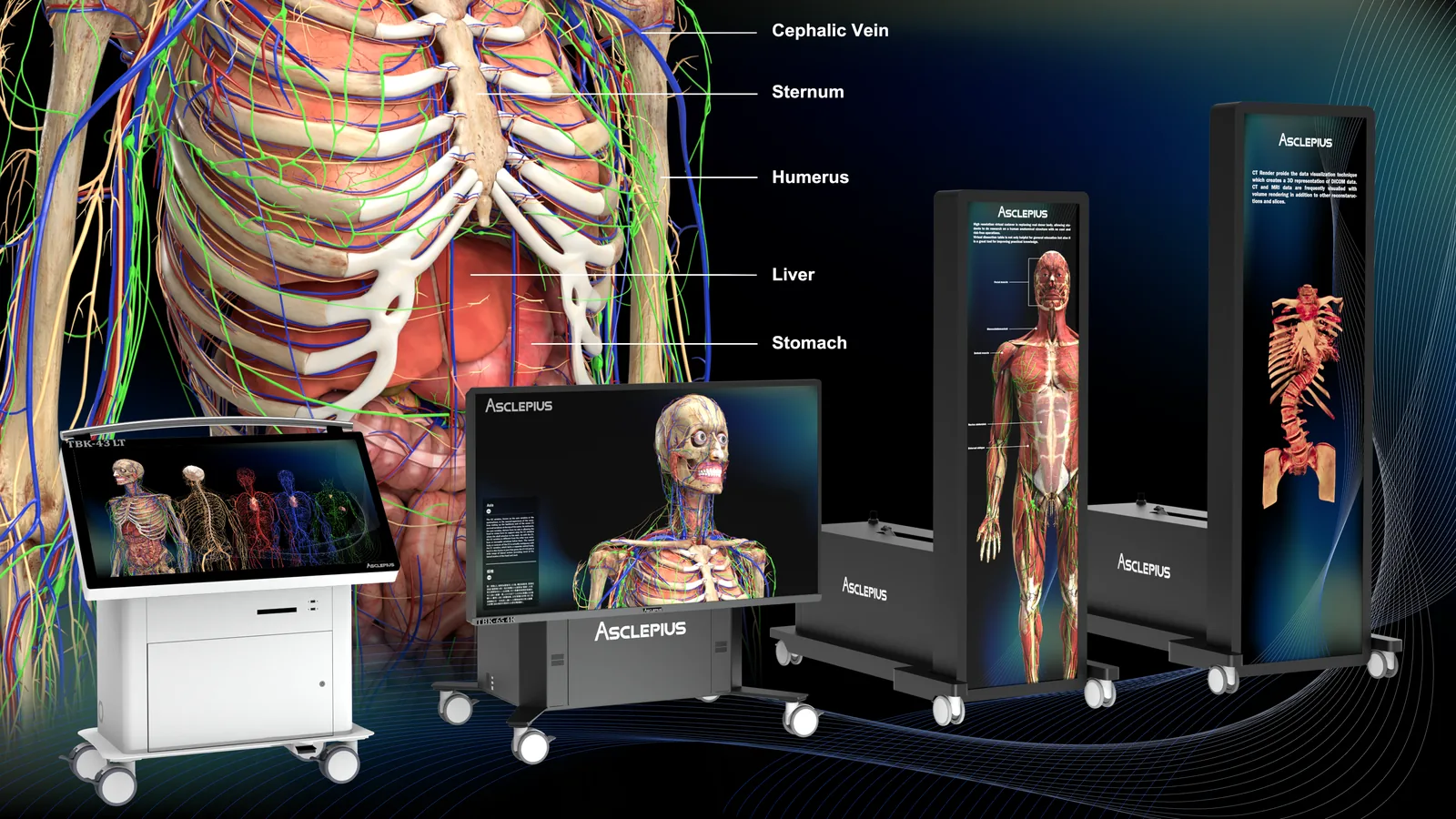
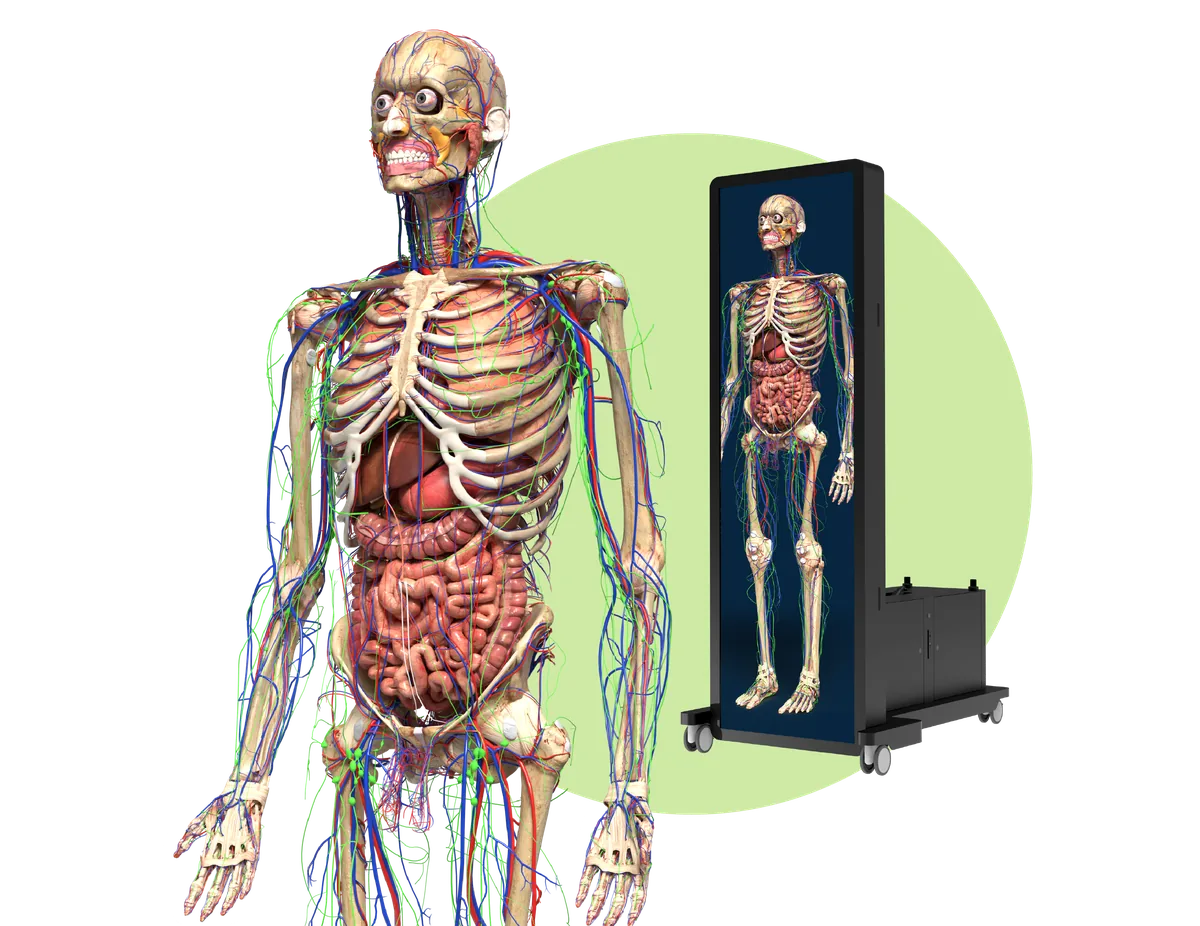
The Asclepius Virtual Dissection Table puts a fully digitised human body on a touchscreen — over 5,000 anatomical structures that can be taken apart layer by layer, put back together, and dissected again tomorrow. No formalin, no odour, no waiting list.
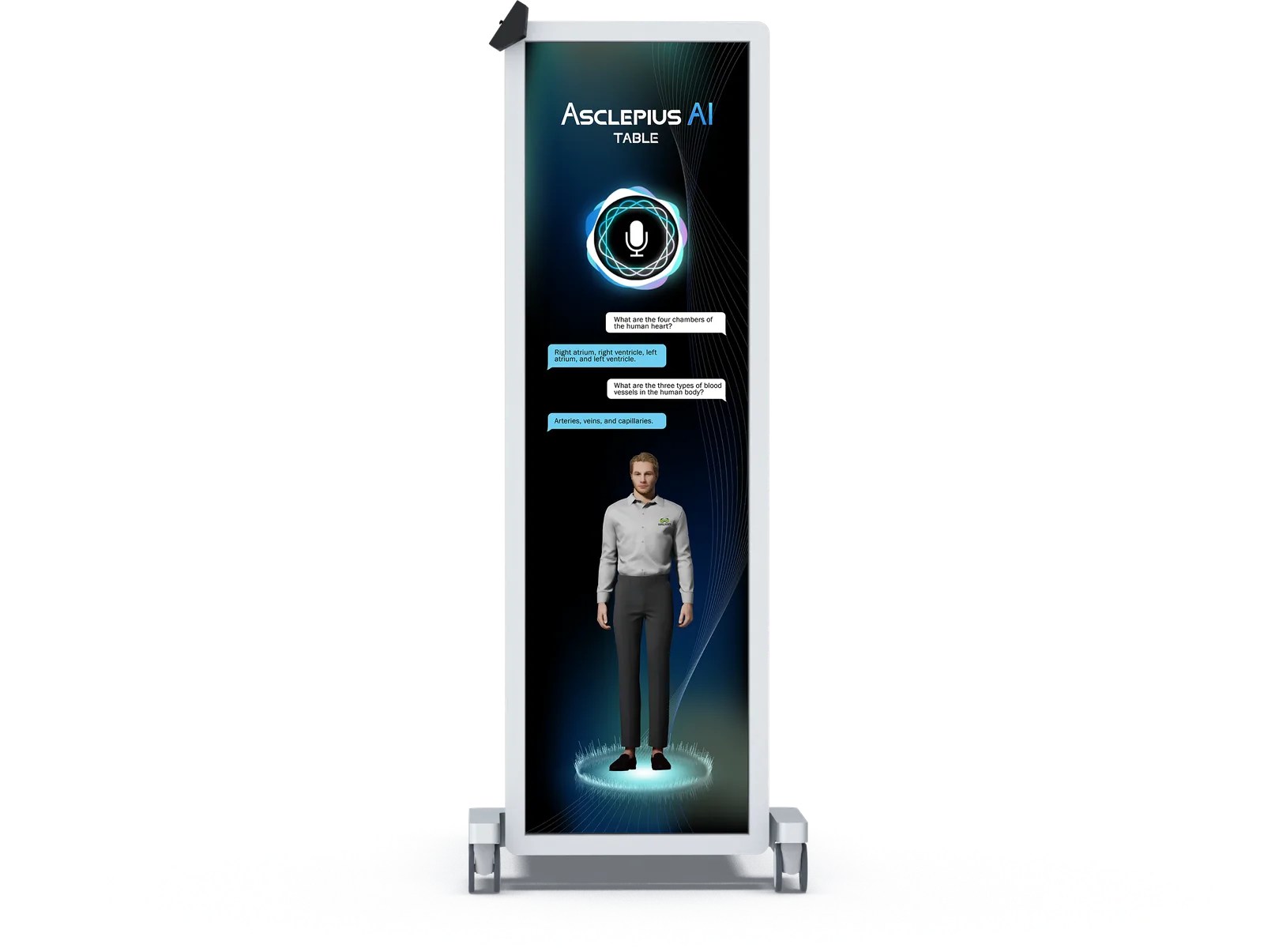
Asclepius AI Table
The world’s first AI anatomy table
Intelligent labelling, content recommendations and a virtual assistant that listens. A built-in camera and microphone let the table recognise who is standing at it and answer questions out loud — so a class can ask about a structure instead of hunting for it.
- Facial recognition and voice tracking, with spoken commands and answers
- Eight software modules, adding Kinesiology and Ultrasound simulation
- Full-body physiological simulation for movement and systems analysis
- 14,000+ NCLEX and Taiwan Nursing Licensure questions, continuously updated
- Menu reachable without moving, multilingual switching, side-by-side comparison
- Two models — TBK-AI-84 Ultra and TBK-AI-65 Vision 4K
Virtual Dissection Table
One table, an entire anatomy department
Asclepius 3.0 is the standard virtual dissection table, in four sizes and without the AI assistant. Every structure is modelled and labelled, every dissection is reversible, and the content keeps growing — the result of years of collaboration between Surglasses, practising clinicians and anatomy professors.
- 5,000+ anatomical structures, dissectable layer by layer
- 912 teaching dissection views and 75 real-cadaver comparison regions
- 1,200+ real clinical orthopaedic CT and MRI cases, plus your own DICOM uploads
- 14,000+ exam questions, with free online examination hosting
- Four sizes — 43″, 65″, 84″ and 99″ — from a lecture podium to a full anatomy lab
- Software updates included for the whole warranty period
What changes in the classroom
Measured against the way anatomy used to be taught
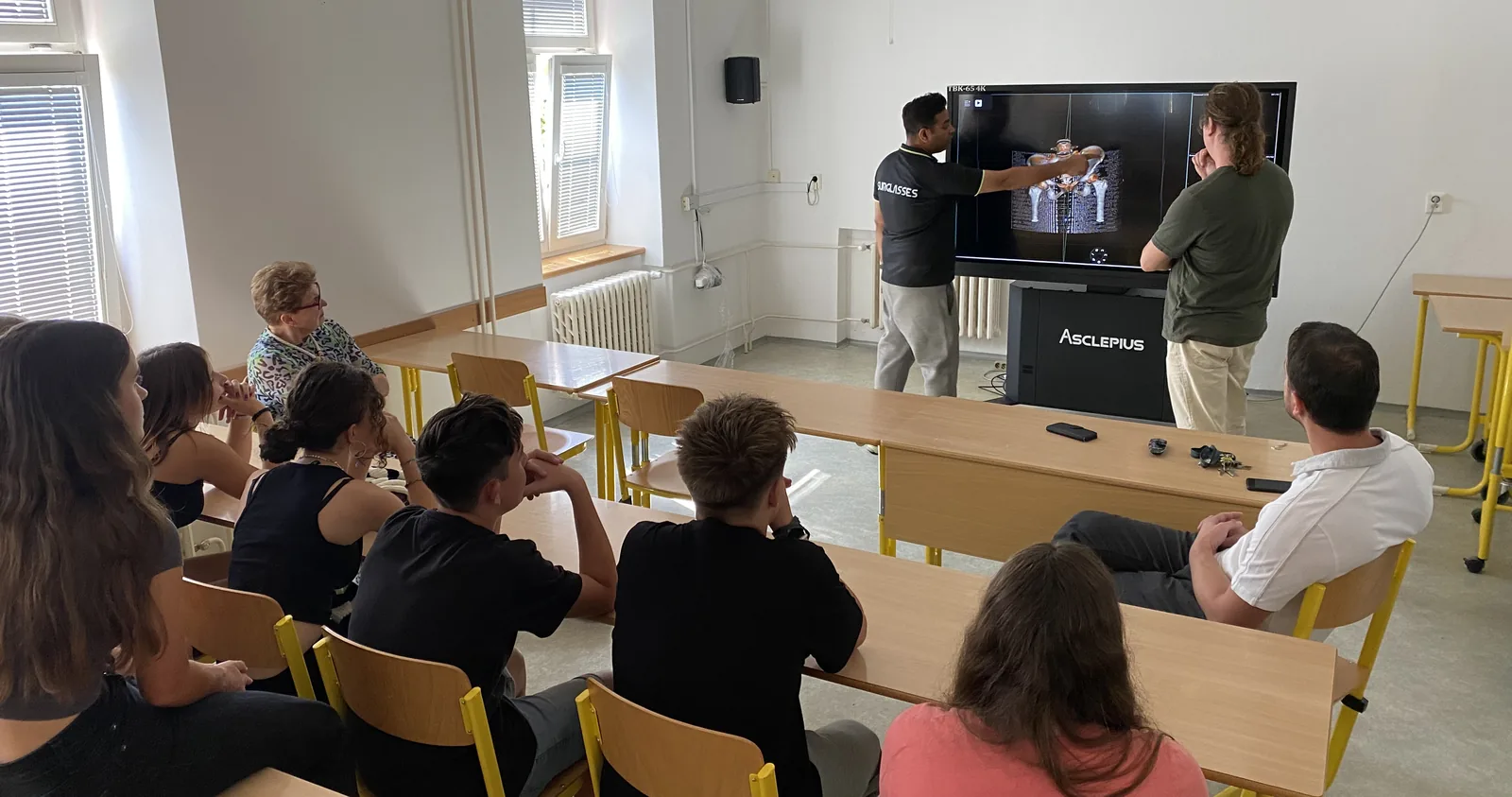
Institutions that replaced or supplemented traditional dissection with Asclepius report the same three things: students score better, lab time goes further, and attention stays in the room.
No formalin, no odour
Nothing to preserve, ventilate or dispose of. The table removes the harmful chemicals, the smell and the maintenance bill that come with a traditional cadaver lab — which is also why more students are willing to use it.
Unlimited dissections
A digital body can be cut apart as many times as the class needs and restored instantly. Teaching is no longer rationed by how many specimens the department managed to obtain this year.
Built for groups
Two to four people around the 43″, seven to ten around the 84″ and 99″. Everyone sees the same body at the same time, so the discussion happens over the model rather than over a textbook.
What’s inside
Six software packages, one interface
Anatomy and OOOPDS Radiology ship with every table. The larger models add histopathology, volumetric CT rendering, and optional embryology and animal anatomy libraries. The AI Table carries all six plus Kinesiology and Ultrasound simulation.
Anatomy
Six full-body cadaver models covering both sexes and several ethnicities, 900+ regional modules, 75+ real cadaver photographs for comparison, and five interactive endoscopic simulations.
OOOPDS Radiology
1,200+ real clinical DICOM CT and MRI cases, semi-automatic bone segmentation, and conversion of 2D scans into 3D models that can be sent straight to a 3D printer.
Histopathology Atlas
Over 1,000 digitised histology and pathology slides, each captured at roughly 10,000 × 10,000 pixels so they stay sharp all the way down to the cell, with expert annotations.
CT Render
Renders DICOM data into interactive 3D volumes, separating soft tissue from bone with adjustable transparency, contrast and colour, and slicing freely in any anatomical plane.
Embryology
Week-by-week fetal development from week 5 to week 42, Carnegie stages, the anatomy of pregnancy with maternal–fetal blood exchange, and over 100 documented embryonic pathologies. An optional module.
Animal Anatomy
Over 40 species modelled in 3D for comparative anatomy, each structure clickable for its name and function, and dissectable layer by layer like the human models. An optional module.
Every table also comes with the Online Examination platform — teachers set the topic, difficulty and time limit, and grading is instant — and the Asclepius Anatomy Online app for Windows, so students can keep revising away from the table.
Explore
Who uses it, and what for
The same table serves a high-school biology class and a hospital simulation centre — what changes is the software, the size and the lesson plan.
Institutions
Medical simulation centres, medical schools, undergraduate healthcare programmes and K–12 science classrooms — four very different audiences, each with its own configuration and curriculum fit.
See the four segments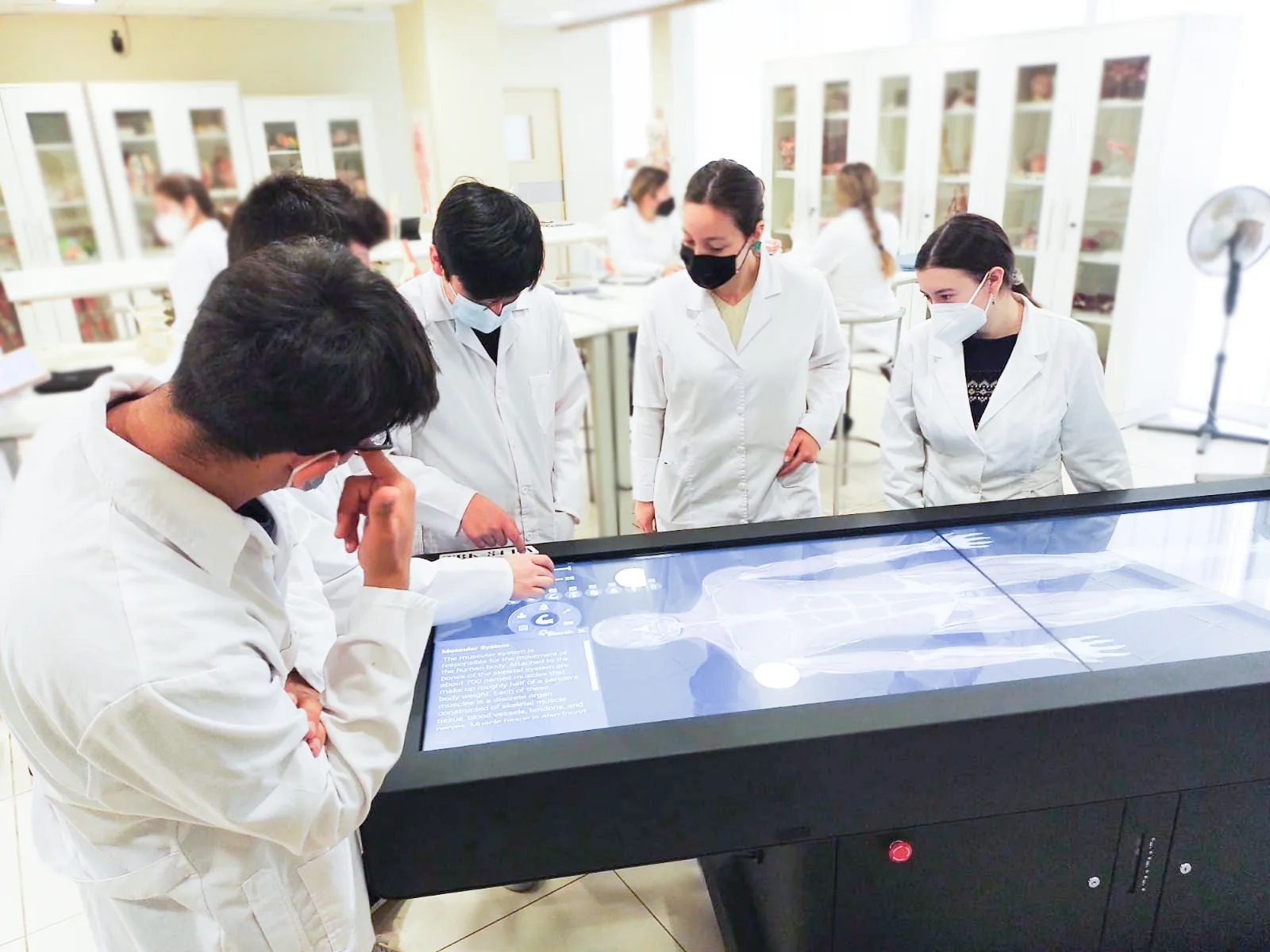
Applications
Cadaver labs, clinical training, surgical planning practice and patient communication — plus case studies from institutions that measured what changed after the table arrived.
See how it is usedSee it for yourself
Find the table that fits your teaching room
Tell us the size of your classes and the courses you run, and we will show you the model and software combination that makes sense — online, or on site with the table in front of you.