
Institutions
One platform, four kinds of teaching room
A hospital simulation centre, a medical school, an undergraduate healthcare programme and a school science classroom are not the same customer. The Asclepius virtual dissection table serves all four — what changes is the model, the software and the lesson plan. This page goes through each in turn.
Medical Simulation Centers
Rehearsal that can be repeated as often as the skill needs
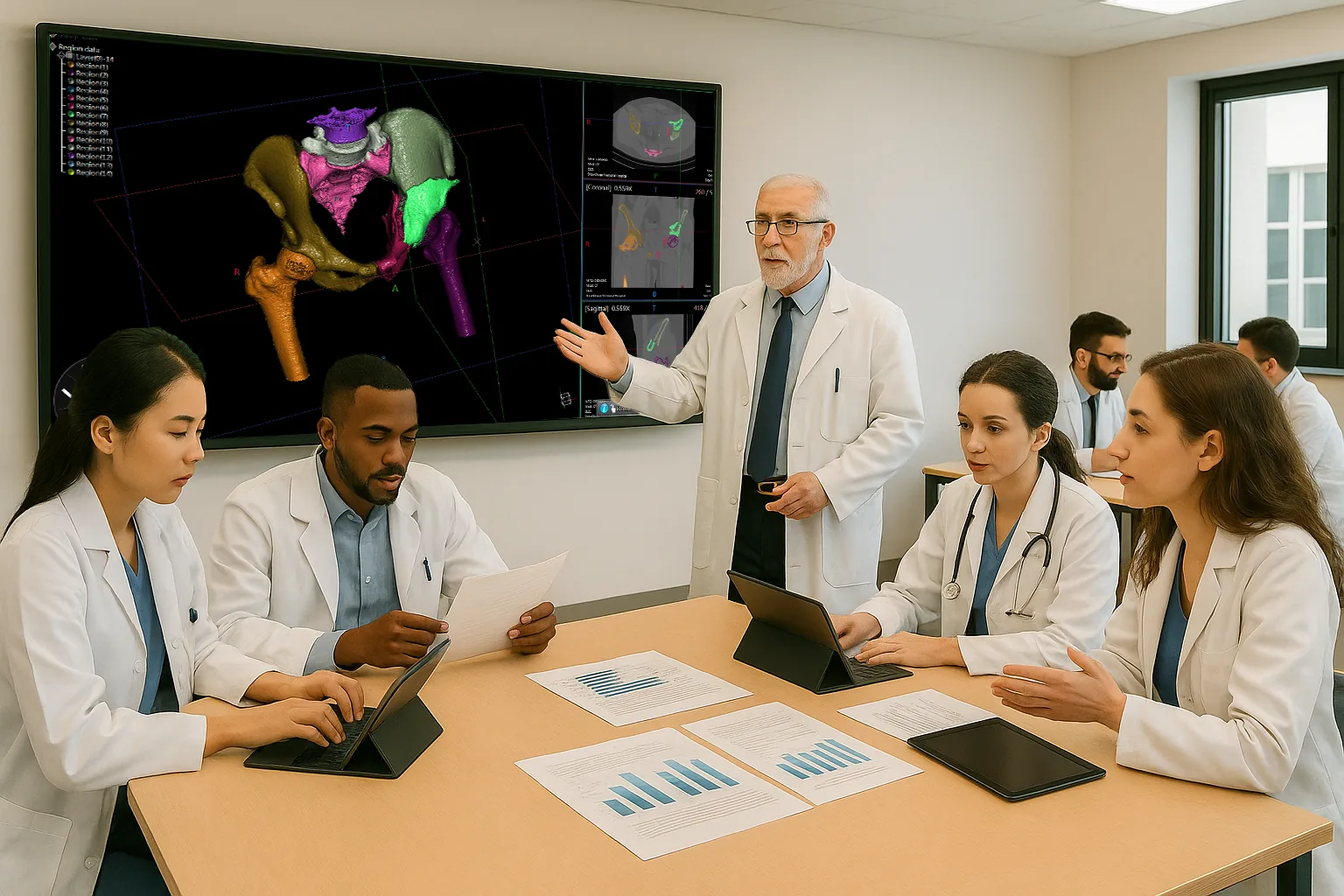
A simulation centre exists to close the gap between the lecture theatre and the ward. Asclepius is built for that job: clinical skills training, basic simulation case studies and collaborative team training, all on 3D anatomy that can be taken apart, restored and taken apart again — in an environment where a mistake costs nothing.
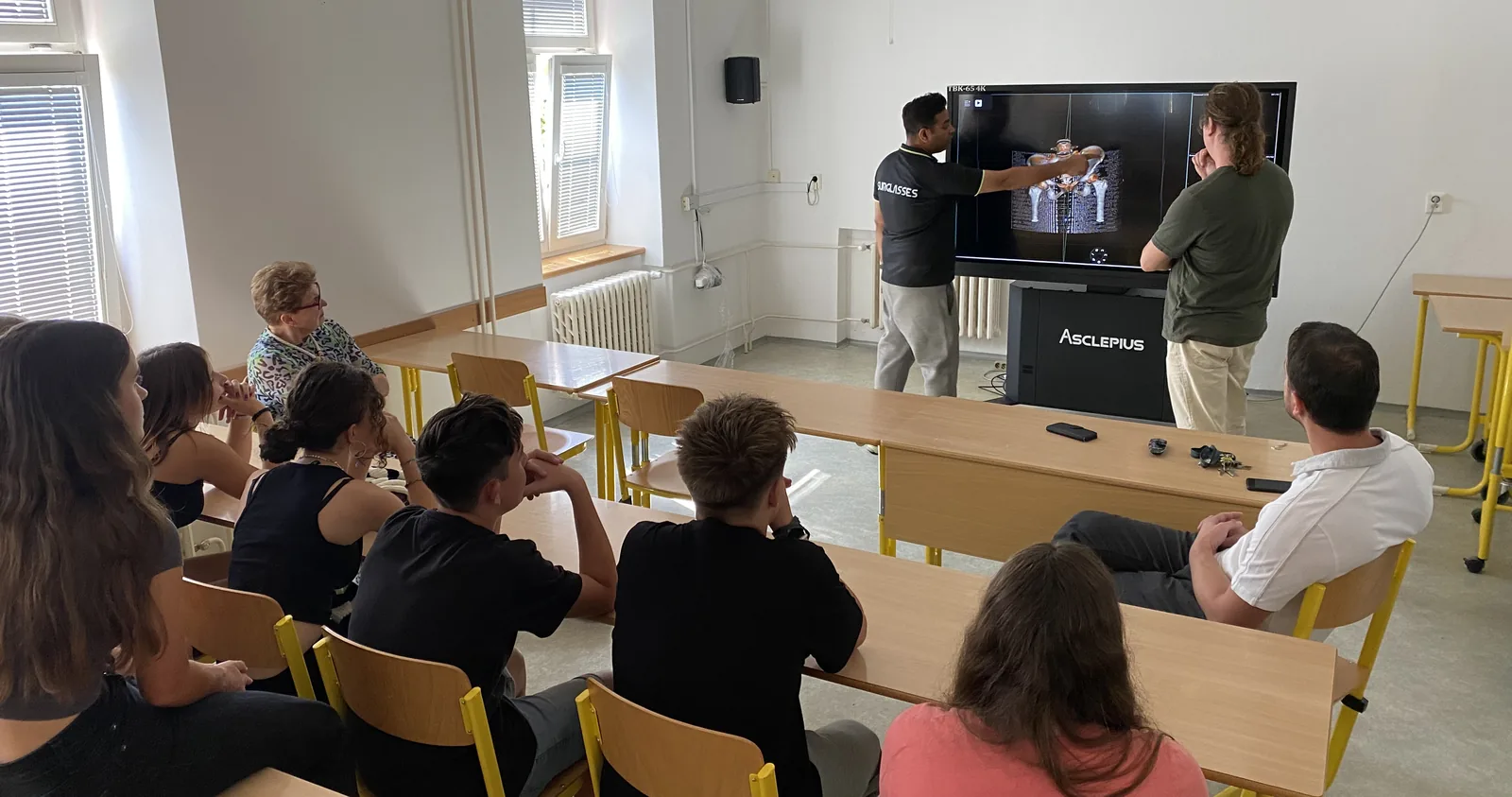
Clinical skills, guided step by step
Trainees engage with 3D human anatomy in real time and rehearse the procedure itself — surgery, diagnostics, physical examination, emergency intervention — with intuitive step-by-step guidance and nothing consumed on the way through.
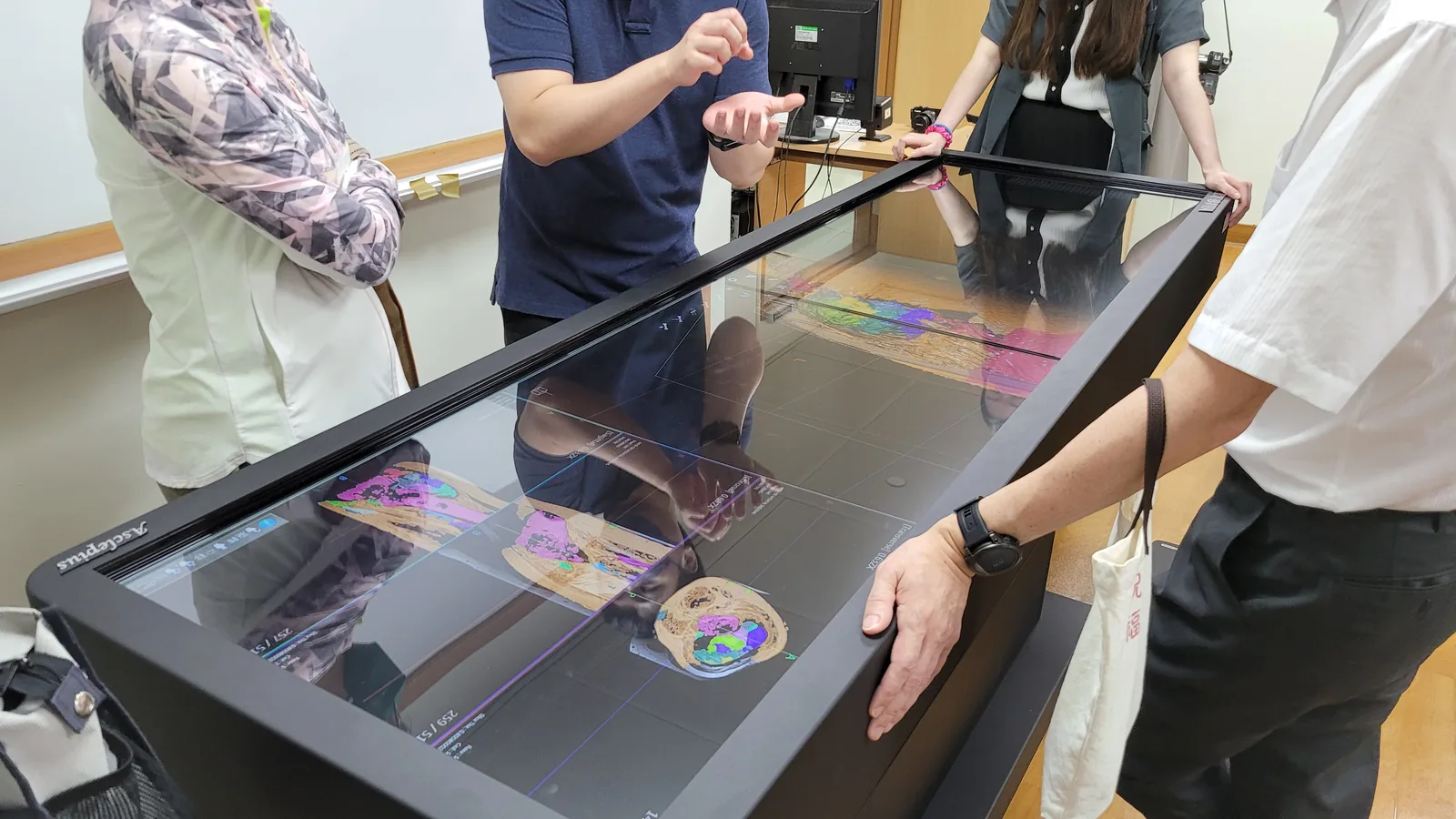
Real-world case studies
A comprehensive library of medical cases to plan surgeries and procedures against, plus DICOM import — so instructors can teach from their own patient studies rather than from a fixed set of examples.
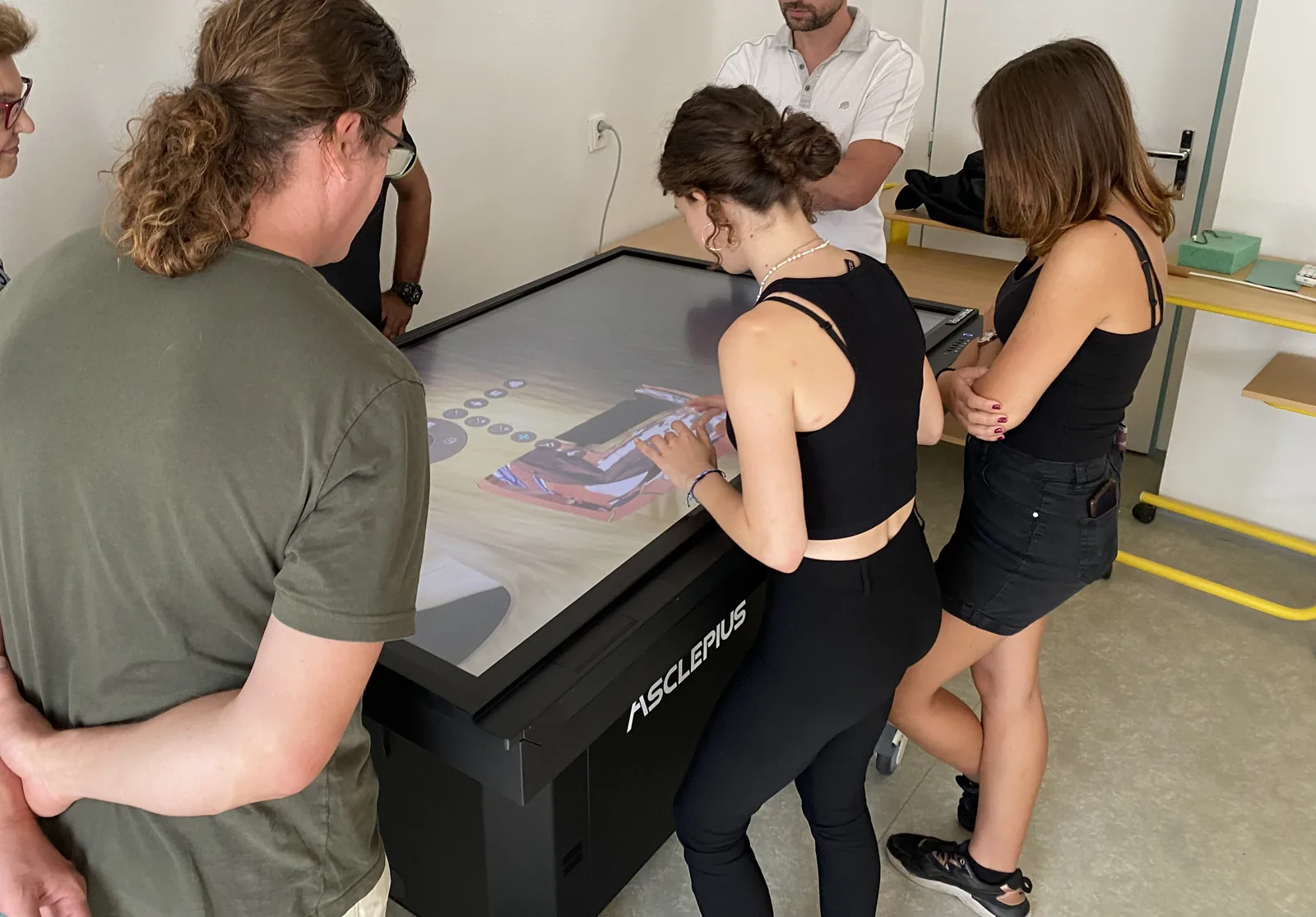
Collaborative team training
Several people work the same case at once: shared observations, a joint diagnosis, a treatment plan argued out loud. Team communication and joint decision-making get practised, not assumed.
Bringing medical simulations to life
No cadavers to source, no chemical exposure, and no waiting for a rare pathology to arrive. Digital anatomy is available on demand, reproducible for every cohort, and rendered in enough detail to examine properly — which is what lets a trainee build diagnostic confidence before meeting a patient.
Medical Schools
Nurturing future physicians
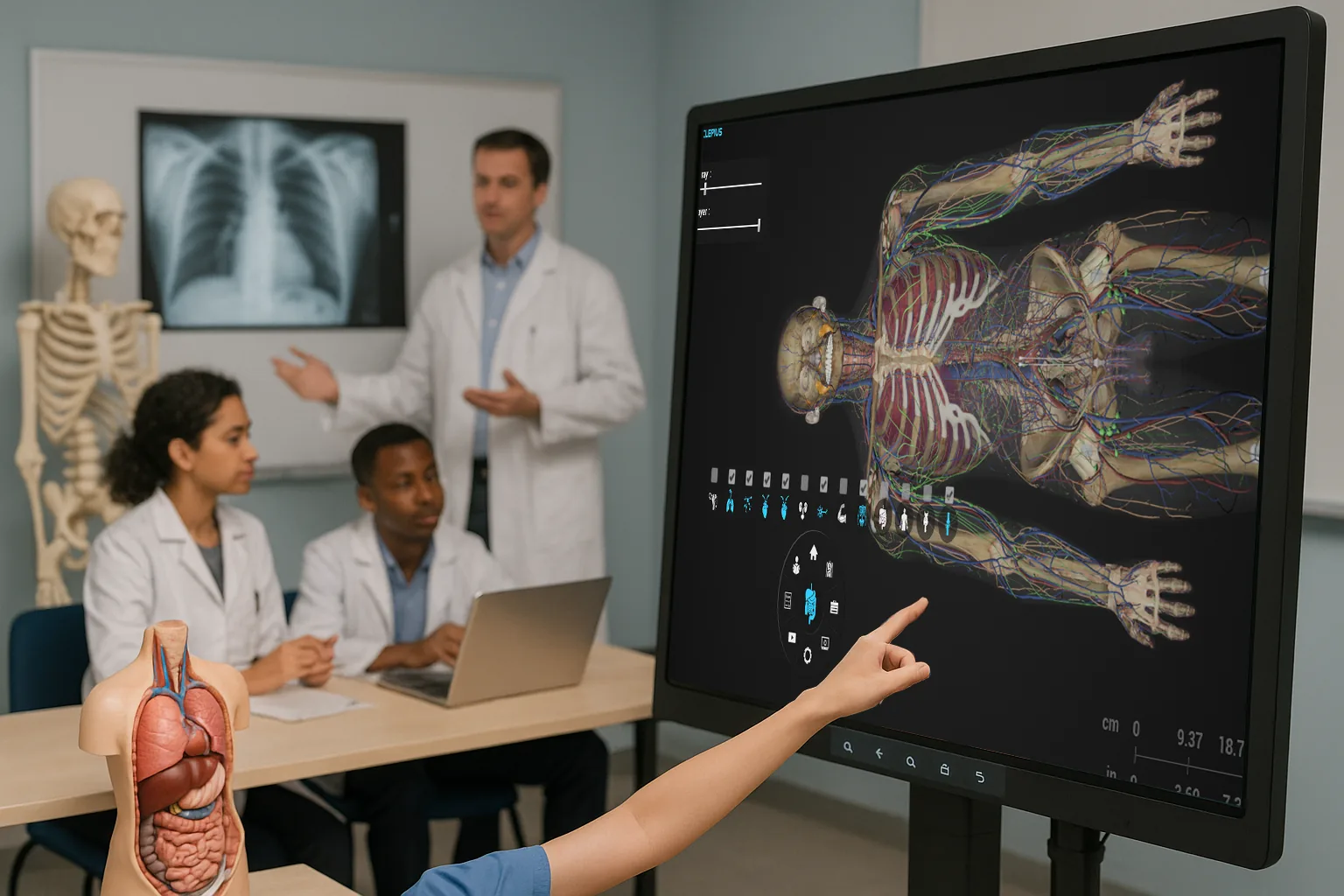
Theory on its own does not produce a physician. Asclepius puts hands-on experience alongside the lecture: anatomy, physiology and pathology explored on virtual models, with clinical procedure and case analysis practised on top of them.
Enhancing the quality of basic medical education
Advanced digital technology integrated into the curriculum rather than parked beside it. A student takes a body apart layer by layer, puts it back, and does it again — as many times as understanding actually requires, which is rarely once.
Every structure is individually modelled and labelled, so the same body serves a gross anatomy session, a physiology lecture and a pathology seminar without anything being prepared in between.
Support for clinical thinking and case analysis
- Realistic patient scenarios — a comprehensive library of real-world medical cases, so clinical reasoning is practised on situations students will actually meet rather than on tidy textbook ones
- Case-based learning — detailed, customisable patient cases that replicate a real clinical environment: analyse the imaging, name the pathology, defend the diagnosis
Seamless integration with simulation and imaging
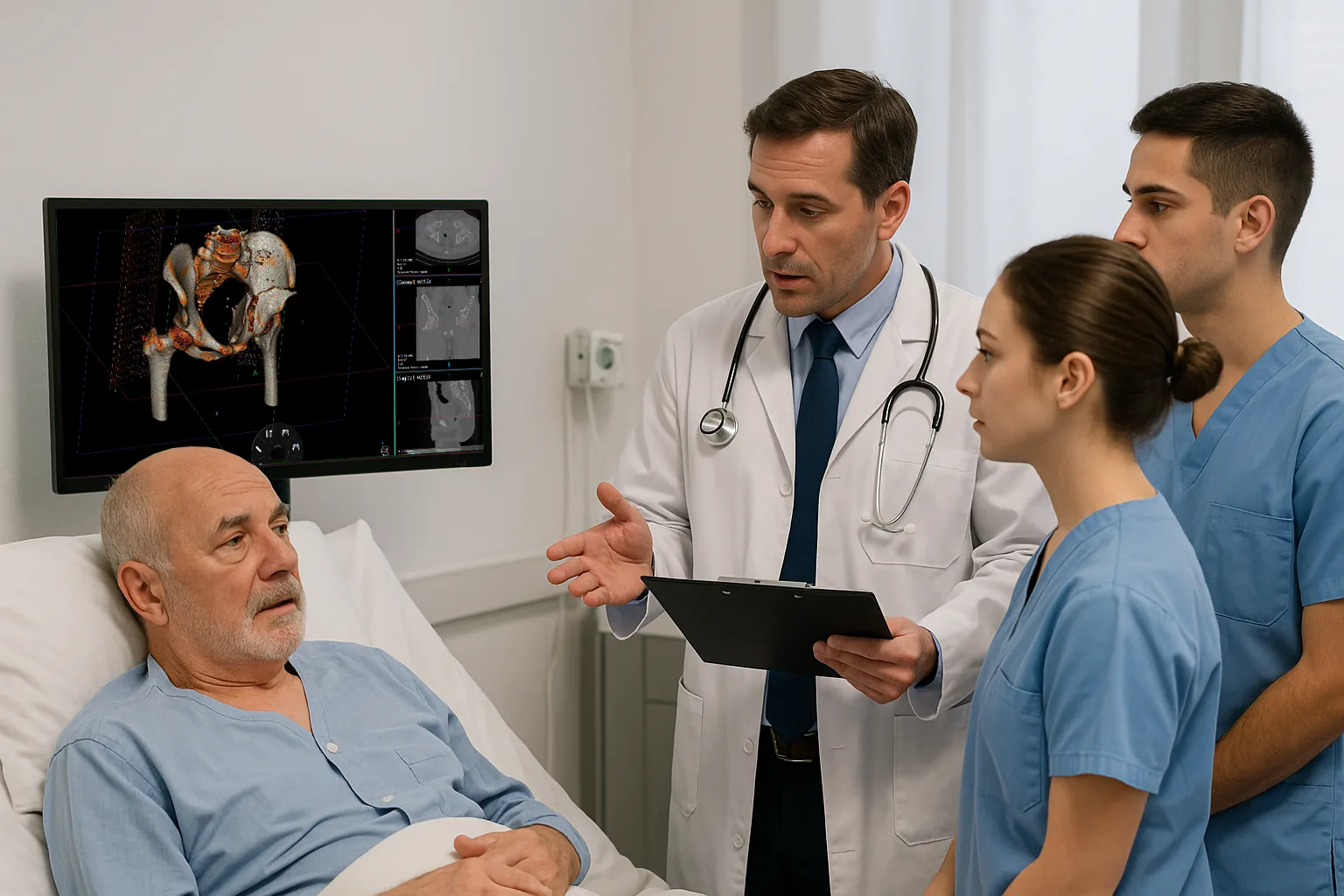
- One teaching ecosystem — the table works with the simulation and imaging equipment a school already owns, bringing high-resolution models, interactive cases and real-time analysis into a single environment
- Import DICOM data — educators upload their own studies and teach directly from them, which is how a cohort gets to analyse a genuinely wide range of patient scenarios in depth
Advanced case-based learning
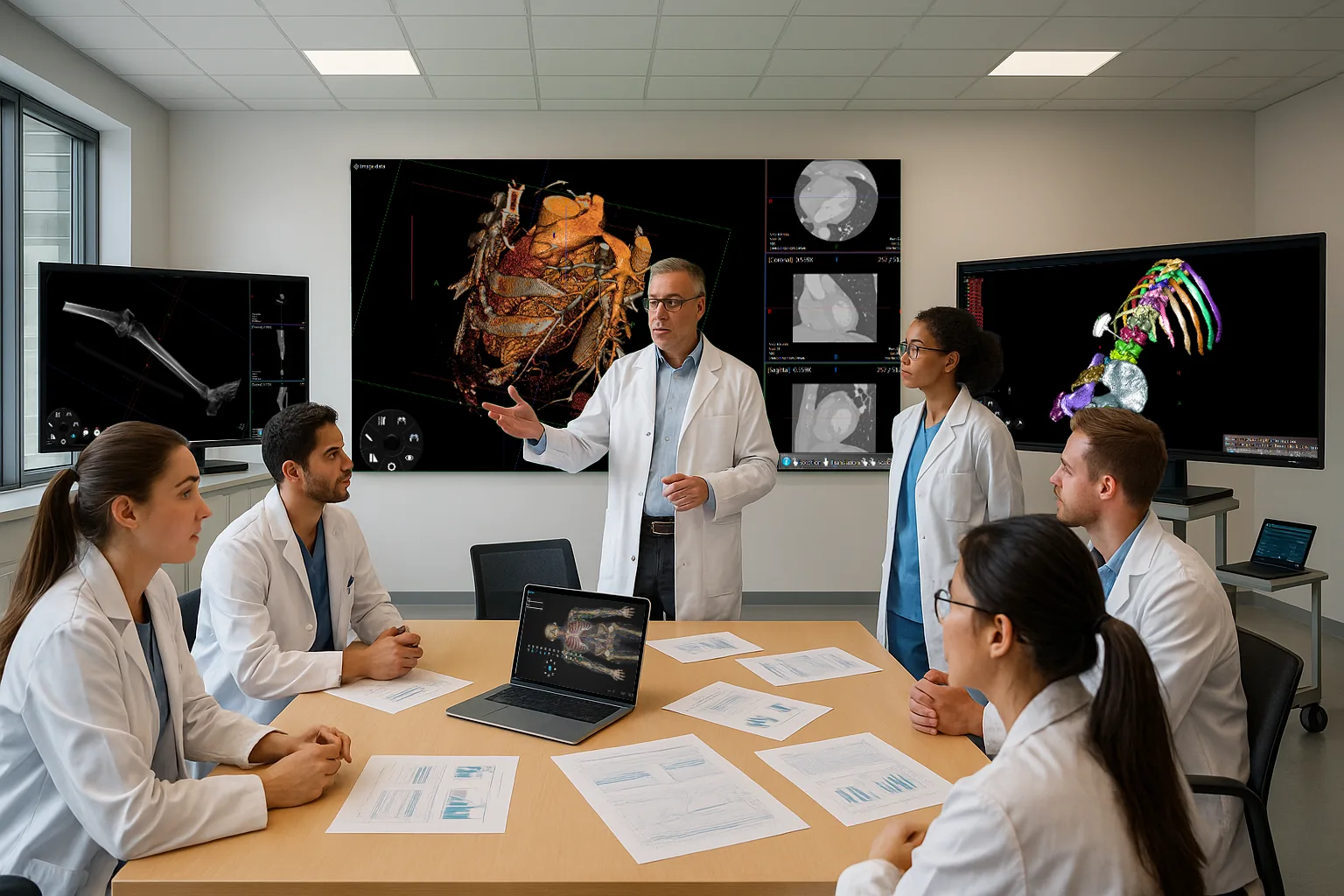
Instructors build their own case scenarios, so a cohort can be walked through a patient pathway rather than a textbook chapter — and the same case can be reopened later from a different angle.
Cost-effective education
No cadaveric resources to source, store or replace. The library is unlimited, always accessible and updated over time rather than exhausted — a sustainable alternative that does not degrade between cohorts.
Undergraduate Healthcare
Building the foundation before medical school
Digital anatomy and physiology tools that hold an undergraduate cohort's attention. In the classroom, in clinical simulation, or working alone in the library, Asclepius builds the knowledge base and the clinical habits that a competitive medical school application is made of.
Anatomy and physiology classes
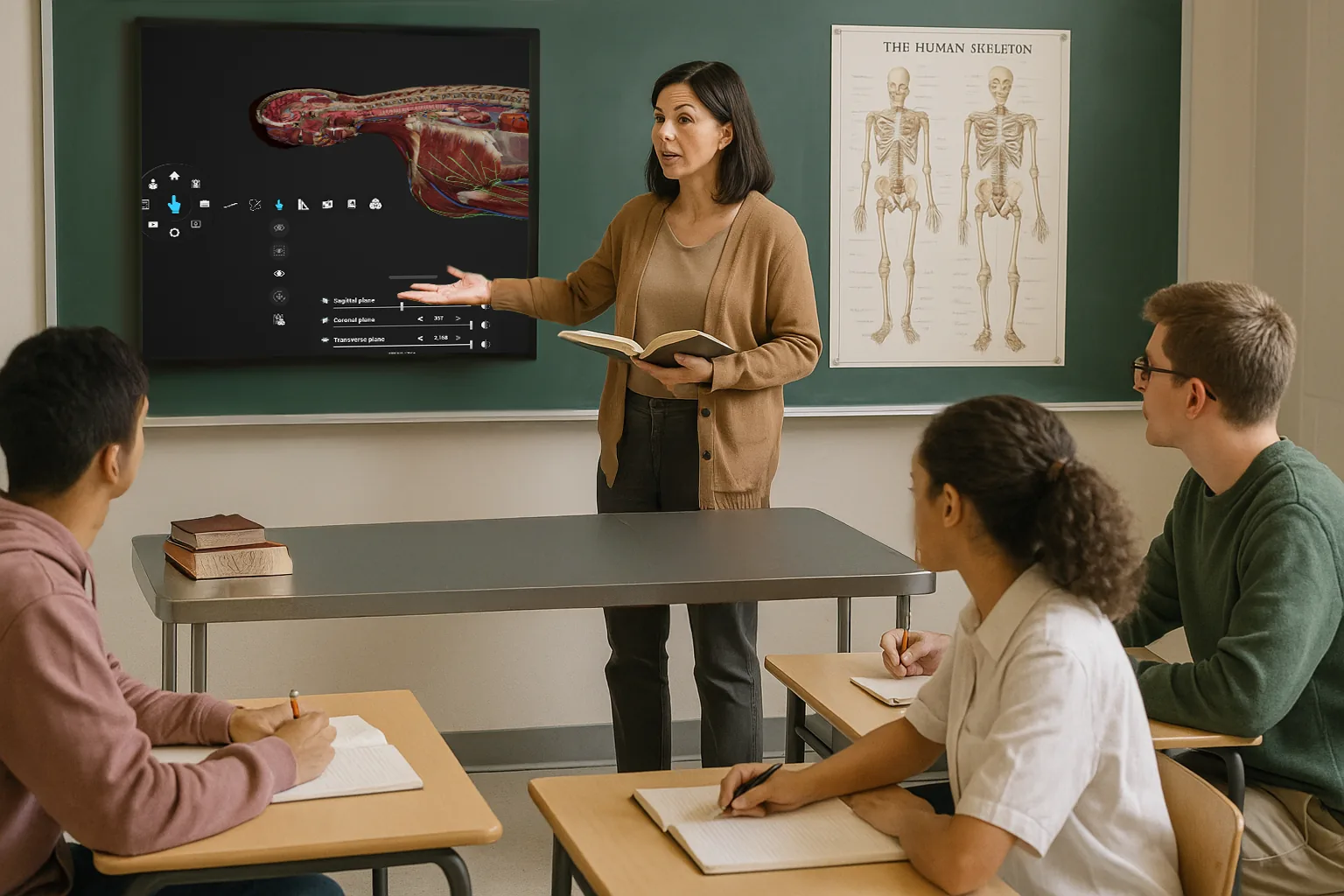
Detailed 3D models bring human biology into the lecture, turning the concepts students usually meet as flat diagrams into something they can rotate and open.
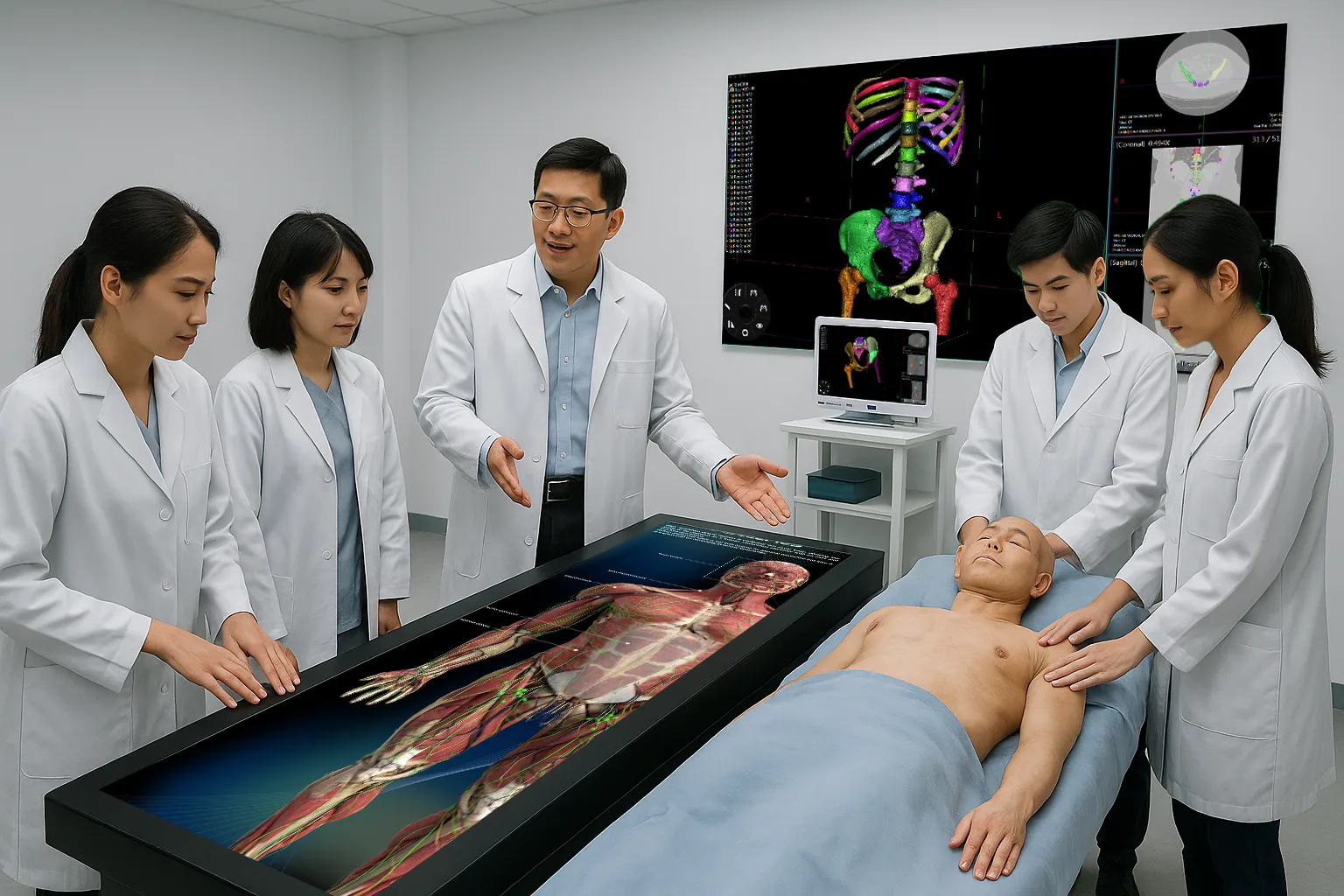
Clinical skills training rooms
Realistic clinical simulations for hands-on practice, so essential procedures are rehearsed properly before they are ever performed on a person.
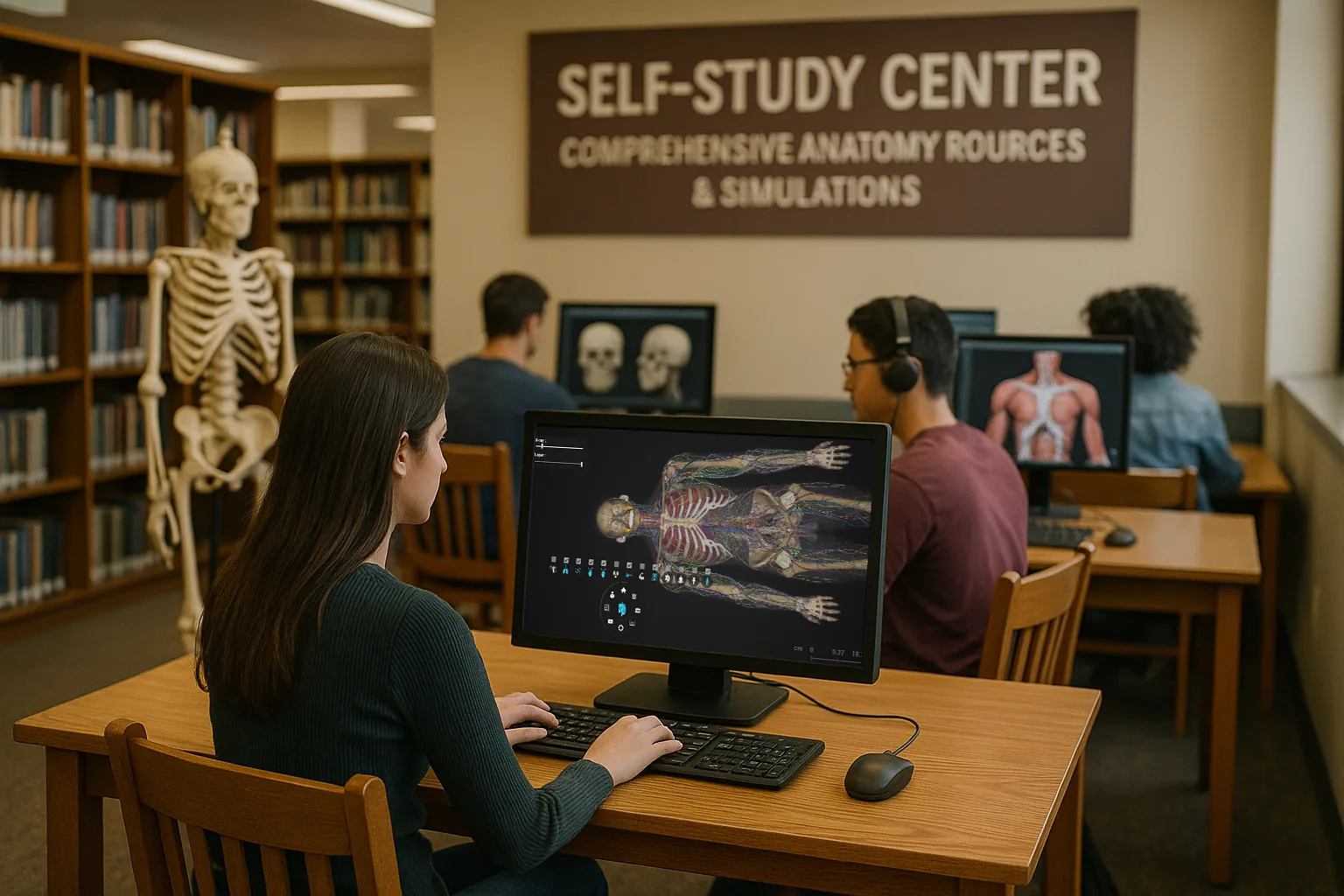
Self-learning centres and library classrooms
The full anatomical library available for self-paced study and revision — no laboratory booking, no supervision, no limit on how many times a region is reopened.
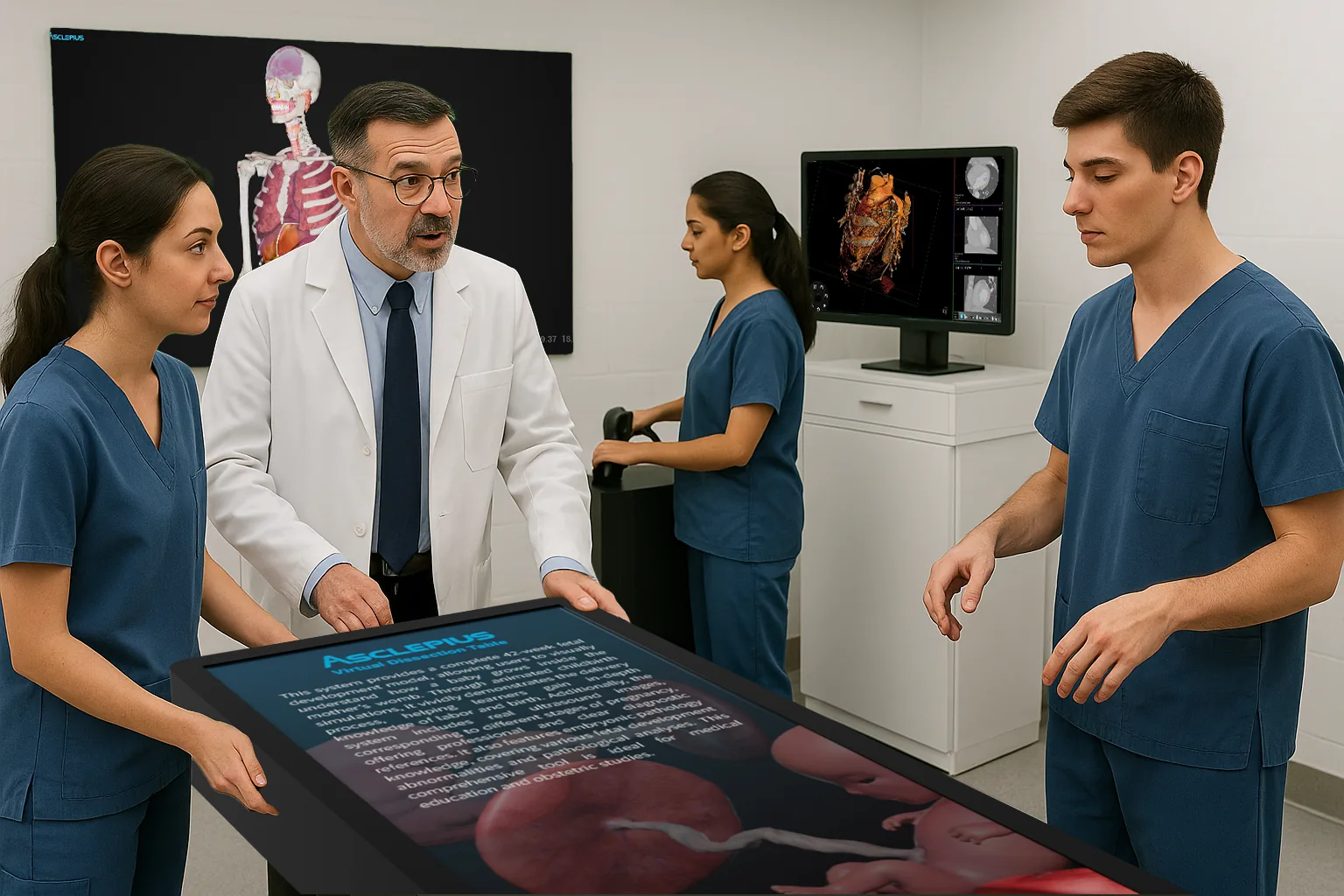
Simulated clinical internships
Hospital simulations that reproduce a real clinical setting, so students arrive at the internship already familiar with the room they are standing in.
Building student engagement
Making difficult material accessible is what keeps students in healthcare. In-depth anatomy exploration and immersive clinical scenarios turn a subject people drop into one they commit to — and prepare the ones who do for medical school and the professions after it.
K–12 Education
Bringing science to life for every grade
High-quality real human anatomy data, taught with no physical samples: nothing preserved, nothing sharp, nothing to dispose of afterwards. The same platform serves a five-year-old meeting the human body for the first time and a final-year student deciding whether to study medicine.
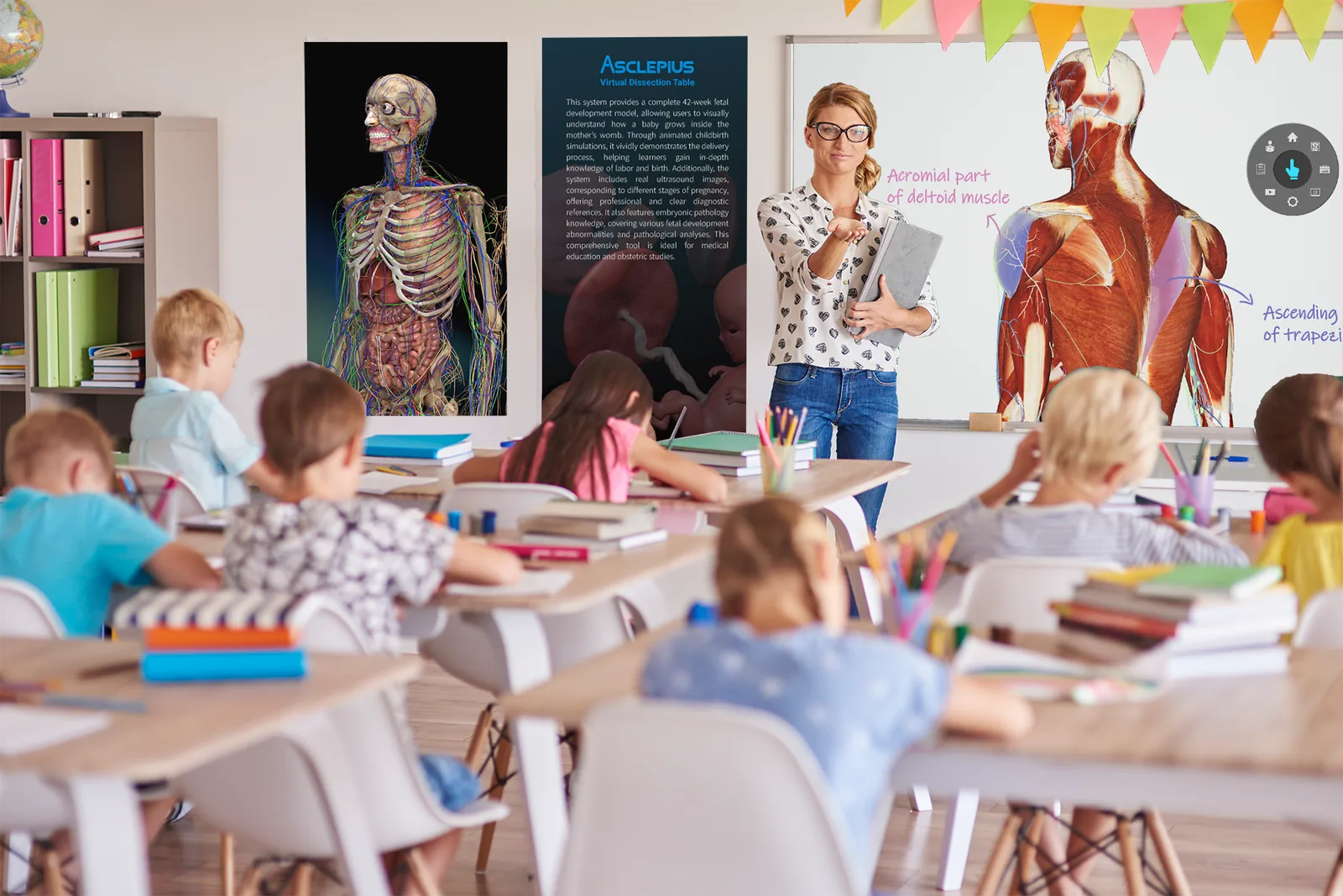
Kindergarten · age 5
First contact with the human body, at a scale a young class can gather round. Nothing to handle carefully, and every question answered by opening the model rather than closing the topic.
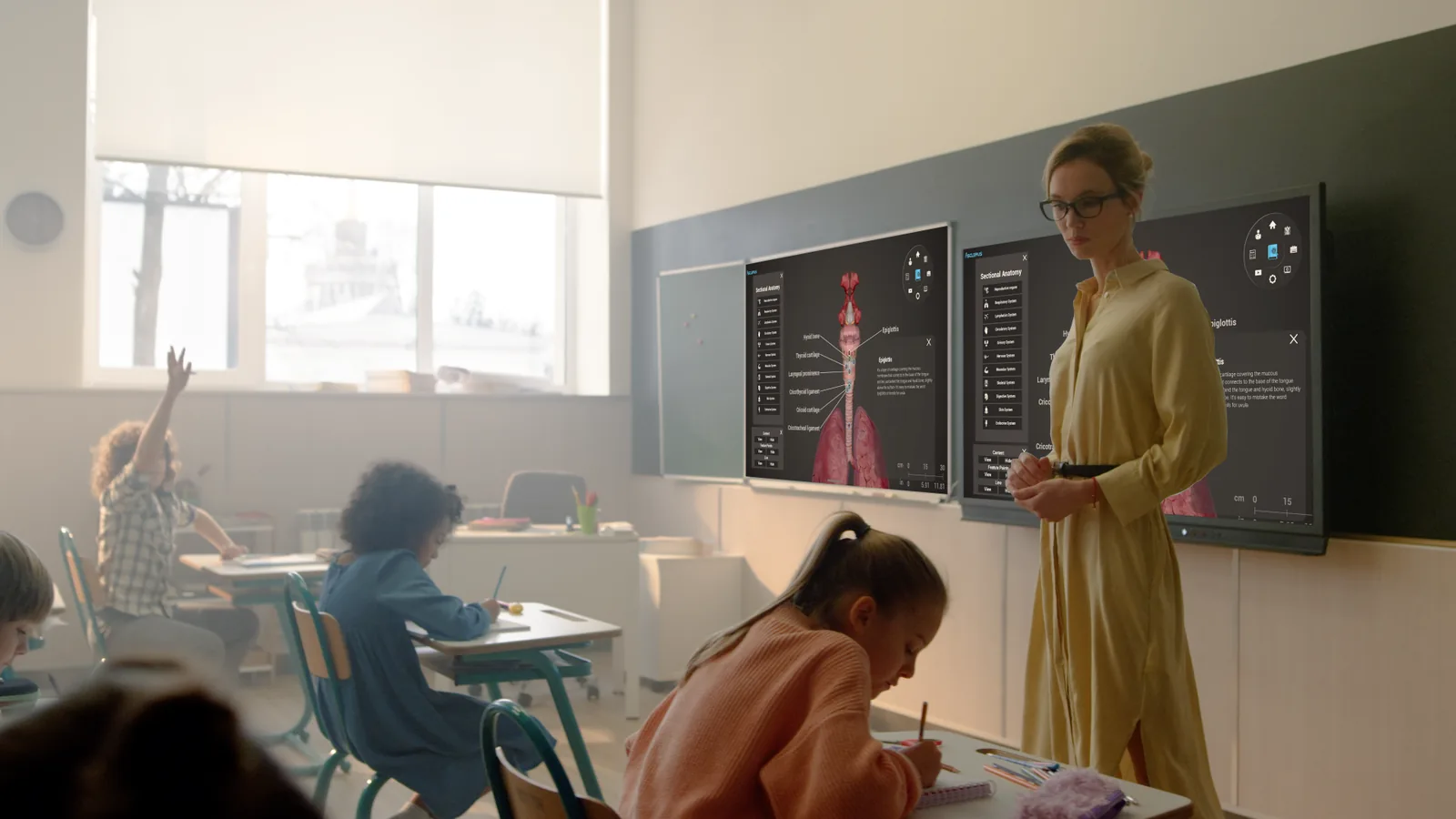
Elementary school · grades 1–5
Core biology turned from an abstract diagram into something on screen that can be rotated, opened up and asked about — which is where curiosity about science usually starts.
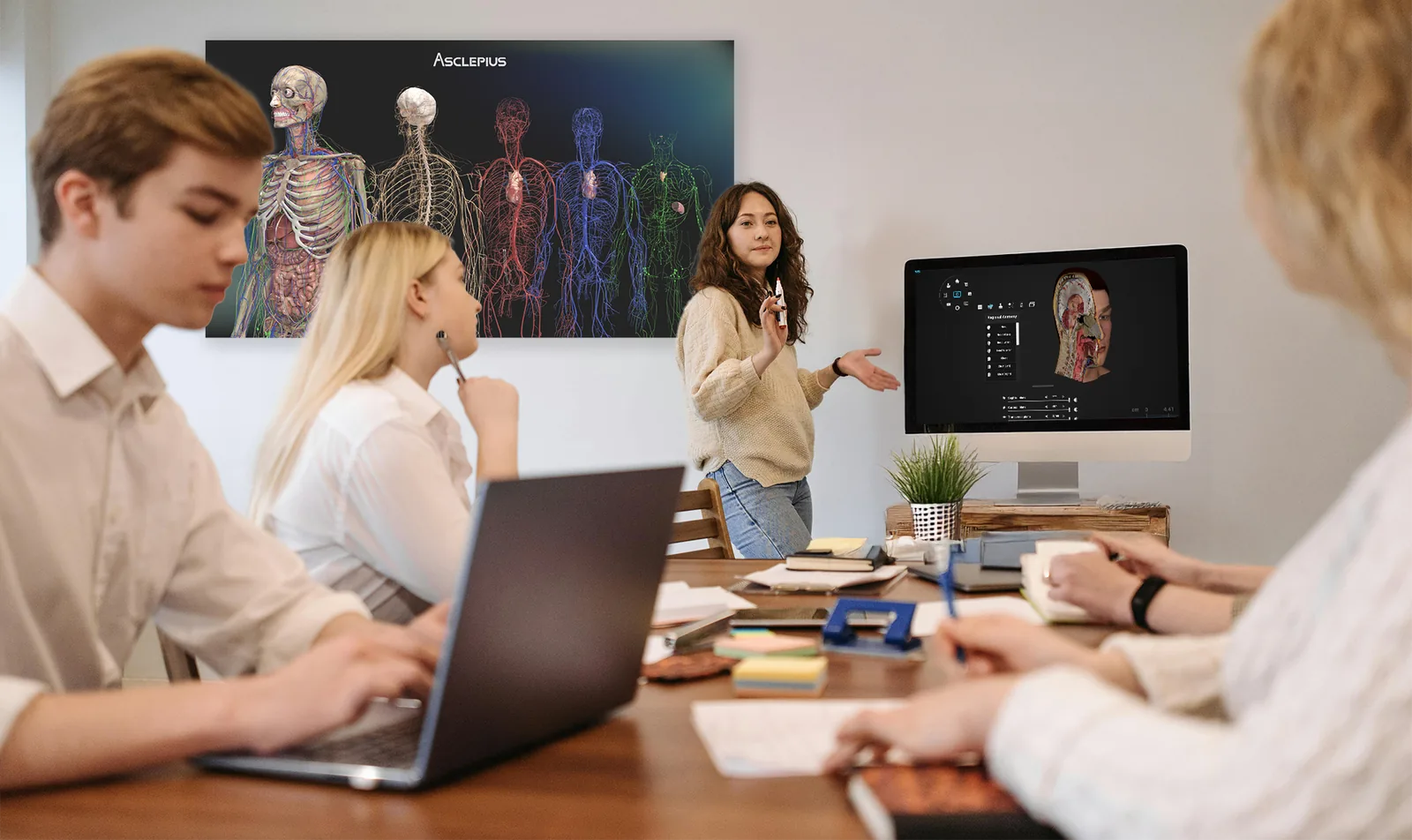
Middle school · grades 6–8
Interactive lessons that build hands-on skill and critical thinking, with 3D models the students drive themselves instead of watching someone else drive.
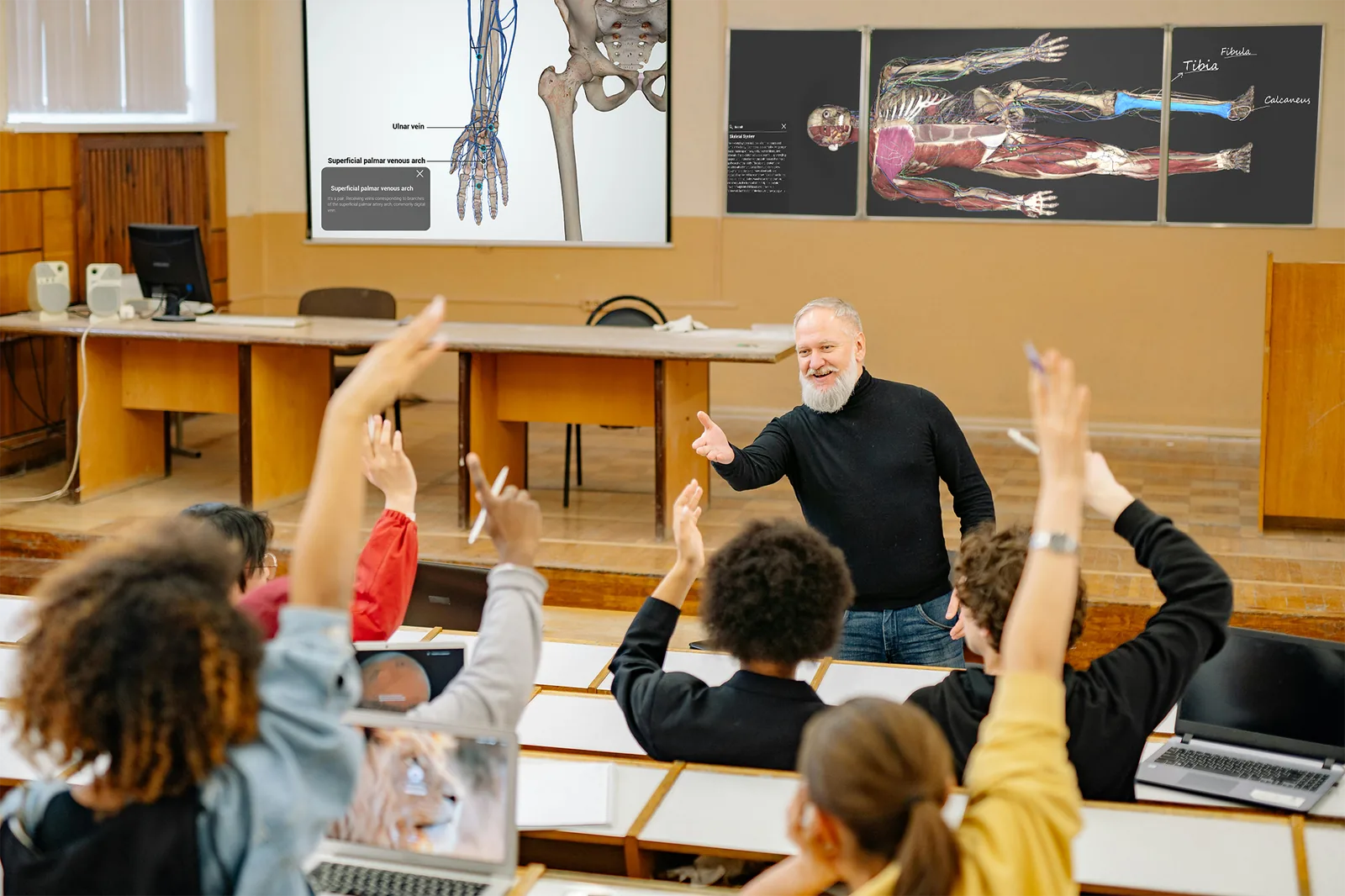
High school · grades 9–12
In-depth anatomical study without a physical dissection — genuine preparation for a science or healthcare degree, and a subject a student can carry straight into one.
Bridging theory and practice for future success
Putting technology into the classroom is where education is going; the point is to pick the kind that teaches the subject rather than the tool. Asclepius meets the classroom's needs and works just as well for independent study, giving students the resources to keep going on their own — which is how a science lesson turns into an academic direction.
Choosing a Model
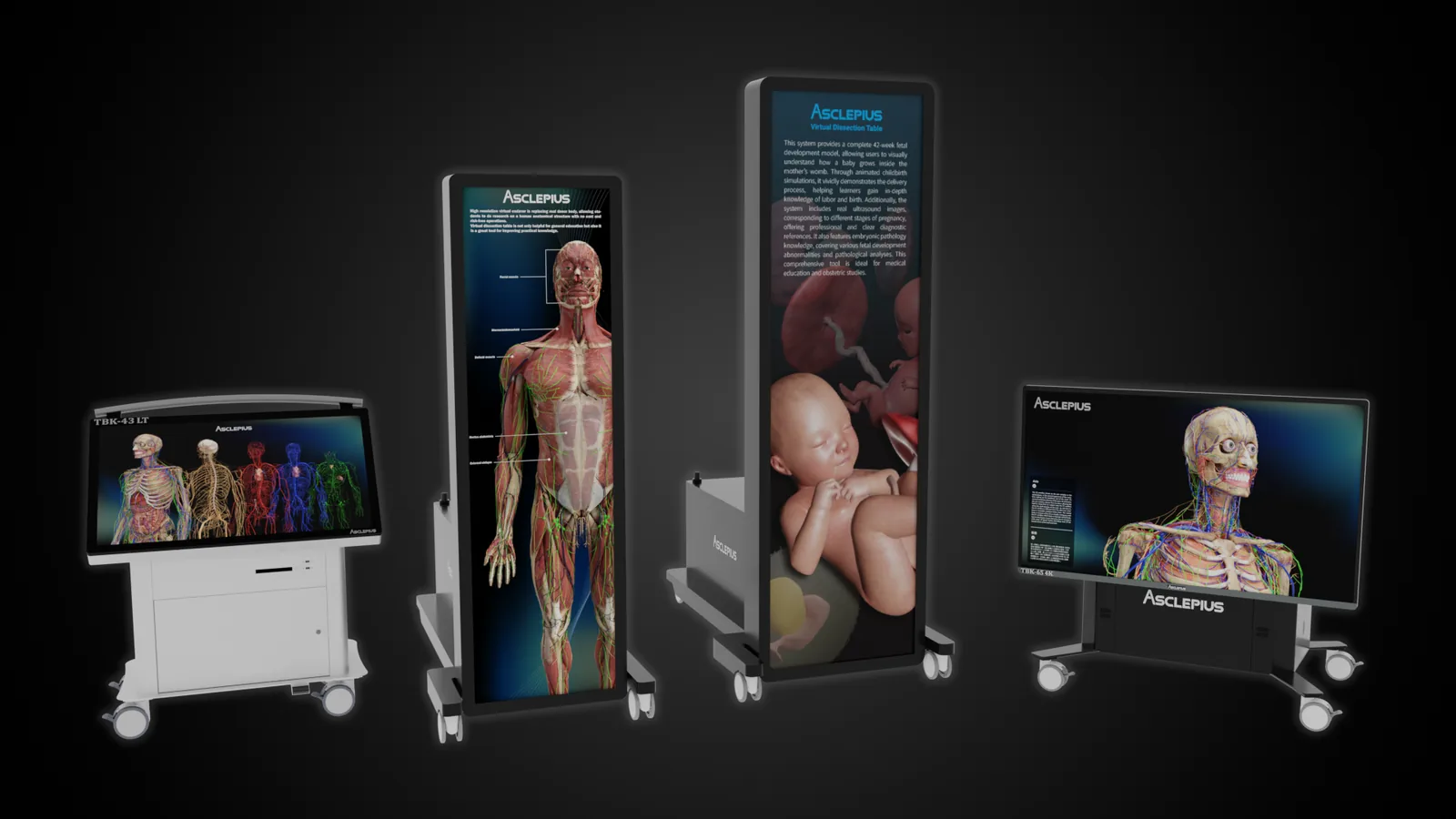
Four models to choose from
One platform in four sizes, chosen by how many people need to stand around it at once — from a compact lecture table for a small classroom to a life-scale upright screen a whole cohort can see.
- TBK-43 LT — lecture table, 2–4 people. The most compact model, with a 4K panel, and light enough to be wheeled between rooms
- TBK-65 4K — small group, 5–7 people. A 4K panel at a size a small group can gather round, which is what histology and pathology work needs
- TBK-84 EA — larger group, 7–10 people. Rises from flat to upright on a single button, for classrooms and anatomy laboratories
- TBK-99 EA — large-scale course, 7–10 people. The largest digital touch anatomy table; bodies are shown at life scale
Talk to an expert
Tell us who you teach
A simulation centre, a medical school, an undergraduate programme and a school science department each need a different model and a different software set. Tell us the audience and the size of your classes and we will show you the combination that fits — online, or on site with the table in front of you.